The store, not the gallery
Most of what a museum holds, you will never see. The store is not a failure of display — it is where the real work of custody happens.
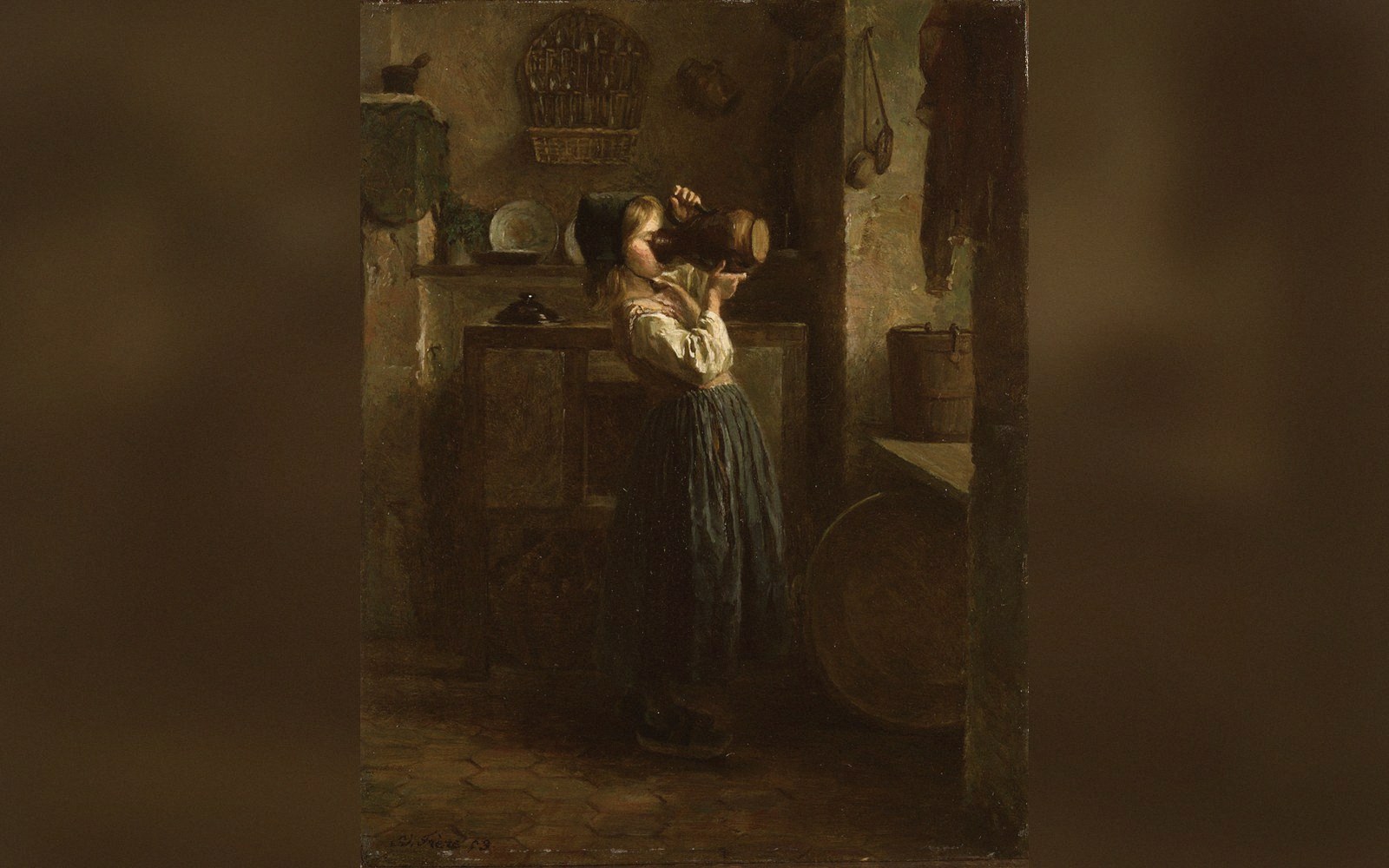
Racked, wrapped, accessible. The store is built for retrieval rather than for looking.
Photo: Pierre-Édouard Frère - Helping Herself - Walters 3722 · Wikimedia Commons
What the store must do
Walk through any permanent collection and you are seeing, at most, a fraction of what the institution actually holds. The Louvre displays roughly eight per cent of its holdings. The British Museum displays only a small fraction of its holdings, far less than eight per cent. Major natural history collections keep ninety per cent or more in storage. The gallery is the edited argument; the store is the full record.
That record costs more to maintain than the gallery does. A store is not a warehouse. It is an environment held within precise tolerances — relative humidity, temperature, light levels, air quality — and those tolerances must be consistent year-round, not merely achieved on inspection day. Fluctuation is the enemy: wood panels split, metal corrodes, textiles distort and panel and canvas age at different rates depending on what the air around them does. Stability is the goal, and stability is expensive to sustain against every season and every heating system's ambitions.
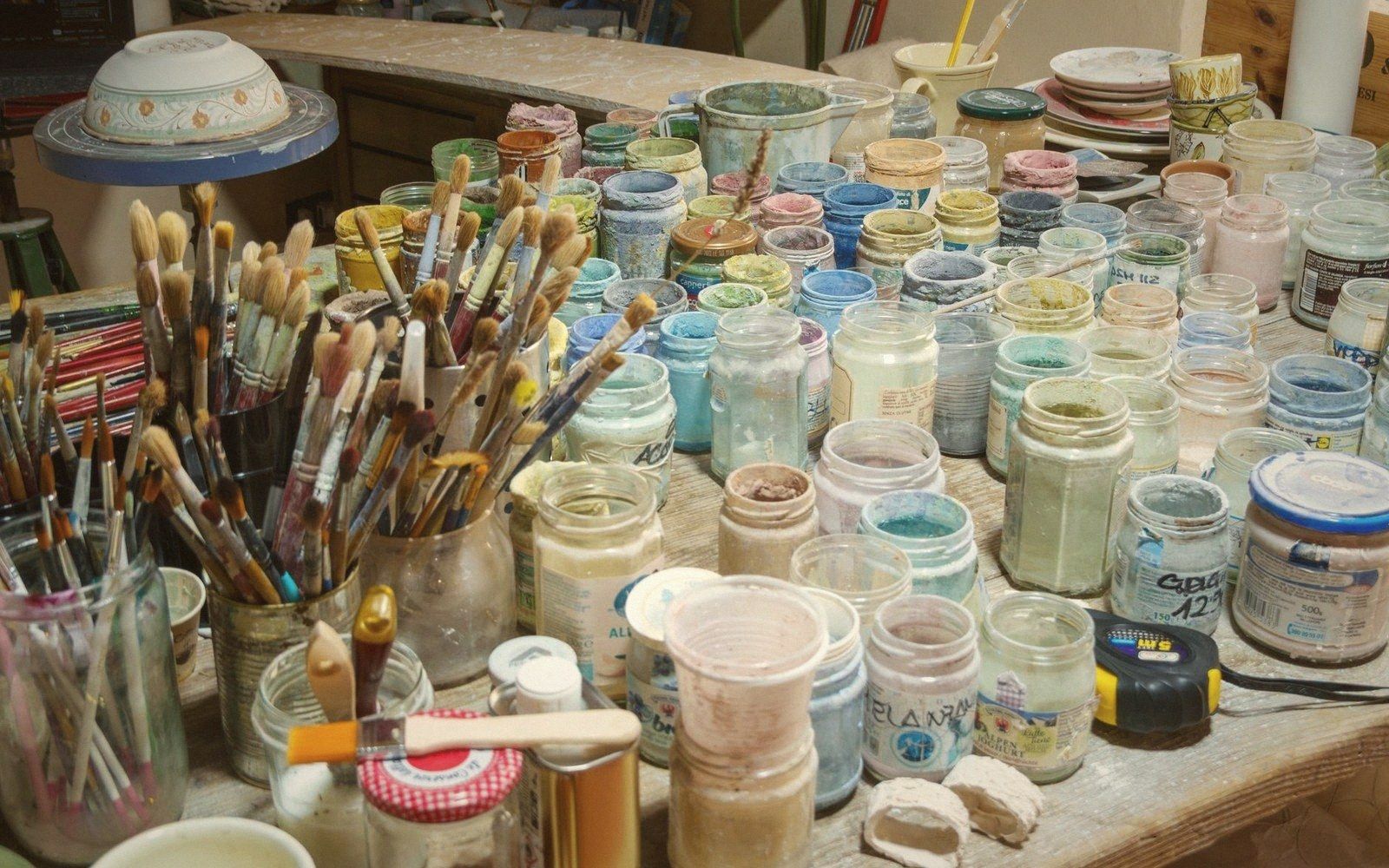
A retouching tray is a short history of what a studio could buy. Several of these colours are no longer manufactured.
Photo: tommy picone / Pexels
The objects themselves must be supported, not stacked. Paintings on racking systems, each separated, each accessible without moving another. Textiles flat or rolled on acid-free tubes, never folded along the same crease twice. Ceramics padded and boxed, not nested. Sculpture on open shelving where curators can actually see what is there. The logic is double: protect the object from mechanical damage, and make it retrievable — because a thing that cannot be found is, for practical purposes, lost.
Documentation is the other half. A store without a legible inventory is a room of orphaned things. Every object needs a unique accession number tied to a location record that is kept current. When objects move — to a loan, a conservation bench, a photography studio — the record moves with them. Institutions that have lost track of objects in their own buildings are not rare; they are the ones that deferred this work during lean decades.
Access matters, too. Researchers with proper clearance, conservators assessing condition, curators preparing loans: the store is a working space, not a sealed archive. Some institutions now run study rooms adjacent to storage, so objects can be examined under controlled conditions without the risks of a gallery setting.
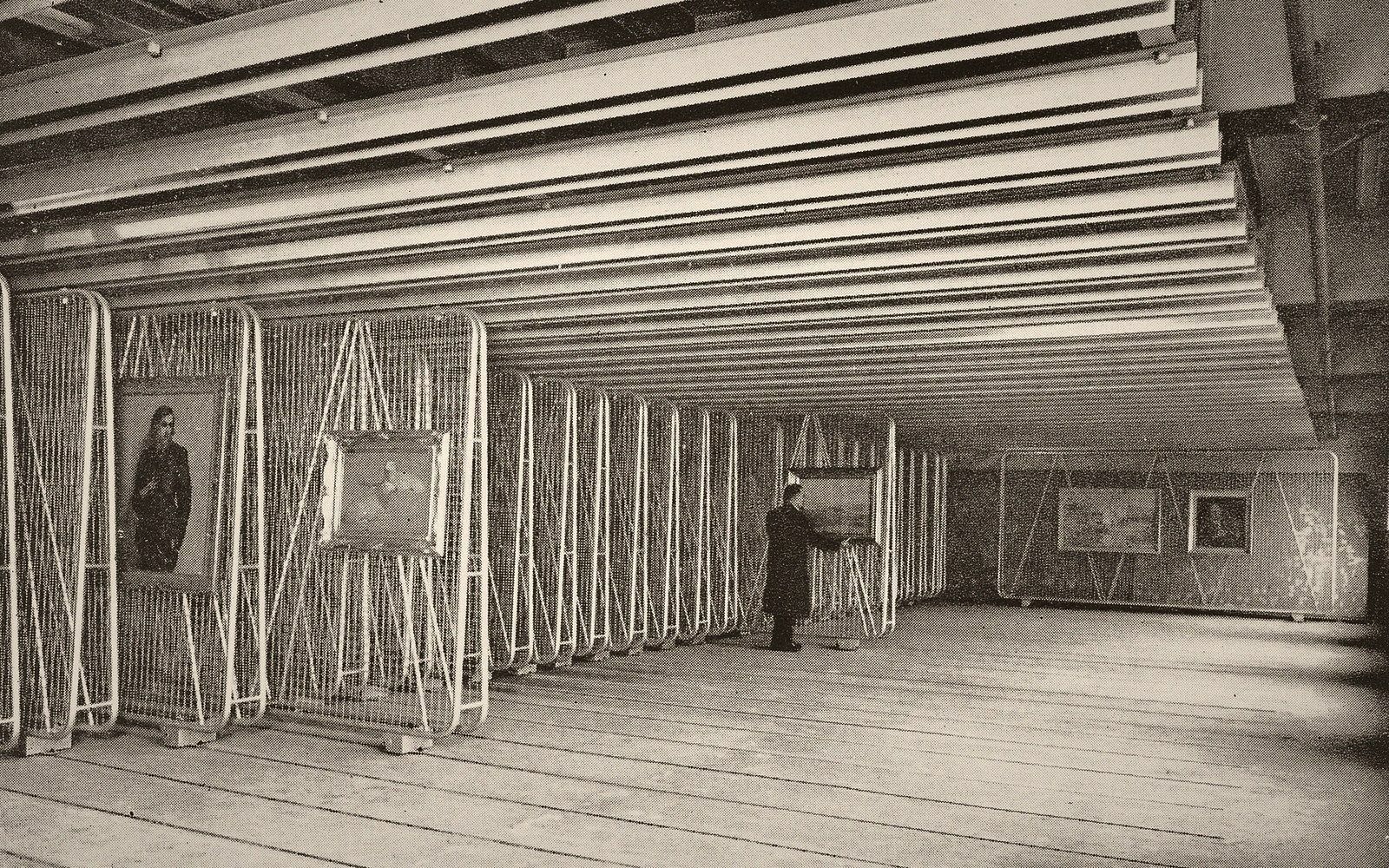
Most of a collection lives on racking like this. The room is designed around retrieval, not display.
Photo: Picture storage racks at the Walker Art Gallery, Liverpool. Wellcome M0015437 · Wikimedia Commons
None of this is glamorous. There are no labels, no sight lines, no ambient soundscapes. But the store is where the idea that conservation is maintenance becomes literal — where the slow, undramatic work of keeping things stable is done every day, without fanfare, by people whose names appear on condition reports rather than wall text.
Filed in Custody