Conservation is maintenance
The condition report that finds nothing has gone wrong is the best outcome. Most of conservation is making sure it never comes to that.
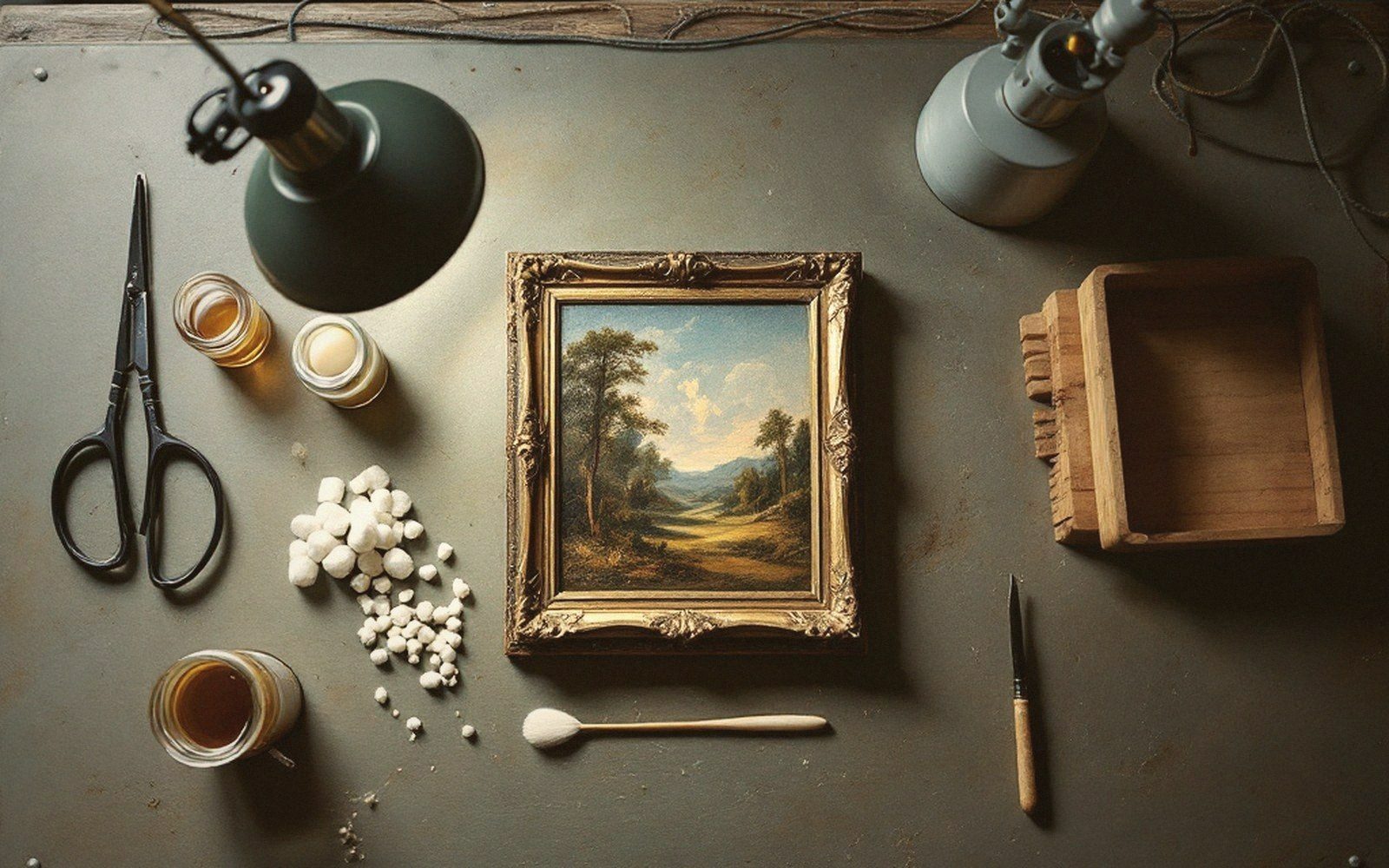
The unspectacular version of the work: monitoring, cleaning, and doing as little as will do.
The dramatic intervention is the failure case
A painting removed from the wall, laid flat, relining technicians working under magnification for six weeks — this is what conservation looks like in a press release. It is also what conservation looks like when something has already gone badly wrong. Adhesive failure, cleavage, flaking, active mould: these are the crises that generate photographs, funding appeals and published treatments. They are not the point of the discipline. They are the evidence that routine care broke down.
The logic of preventive conservation is simple and, in practice, hard to sustain. Keep the environment stable. Control light, relative humidity and temperature within ranges that slow the natural ageing of organic materials. Keep pests out. Inspect on a fixed schedule. Clean before the accumulation of dirt becomes a problem rather than after it has become one. The dramatic intervention — the one that gets written up — is almost always the consequence of deferred maintenance: a roof leak that was known about, a display case that had been gently fluctuating for a decade, a storage room that flooded once and was considered sorted.
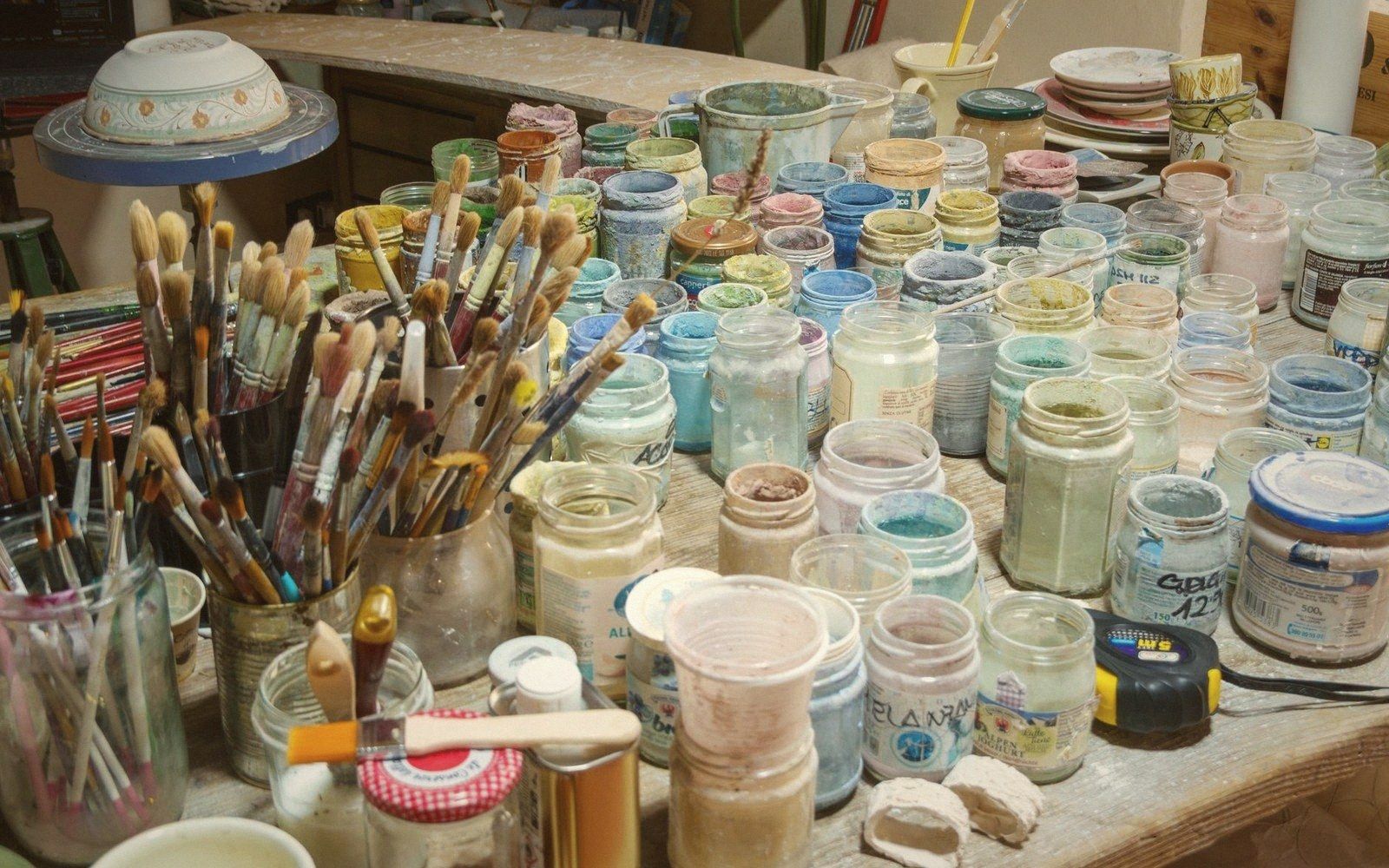
A retouching tray is a short history of what a studio could buy. Several of these colours are no longer manufactured.
Photo: tommy picone / Pexels
What routine looks like
Monitoring is not glamorous work. It means checking data loggers, adjusting heating or ventilation in response to what they record, walking the building on a fixed schedule with a torch and a notebook. In a collection of any age, it means tracking the condition of individual objects over time — not because they are about to collapse, but because early change is vastly cheaper to address than late change. A small lifting flake of paint, stabilised when first noticed, may be a morning's work; the same flake ignored for three years can become a structural problem for the whole panel.
Cleaning is the intervention most often done and least often discussed in print. Surface cleaning — removing dust, atmospheric particulates, the residues of human handling — slows chemical degradation, makes problems visible and is, in objects well enough understood, low-risk. It is not the same as aesthetic cleaning, which removes accretions that have become part of an object's surface history and requires a different order of judgement. Housekeeping-level cleaning, done consistently by people who know what they are looking at, keeps objects from reaching the state where aesthetic questions even need to be asked.
The environment question is the one that most institutions struggle with, because stable conditions cost money to maintain, and the money is continuous rather than one-off. A major treatment can be fundraised; a humidity control system running properly for thirty years is a budget line. Collections in historic buildings face a further difficulty: the building itself moves, breathes and responds seasonally, and the thermal mass and hygroscopic behaviour of old walls can work for or against stable conditions depending on how the building is managed. Heating, wiring and lighting in a building whose walls cannot be chased touches on exactly this problem — how to install modern environmental control in a fabric that was not built to carry it.
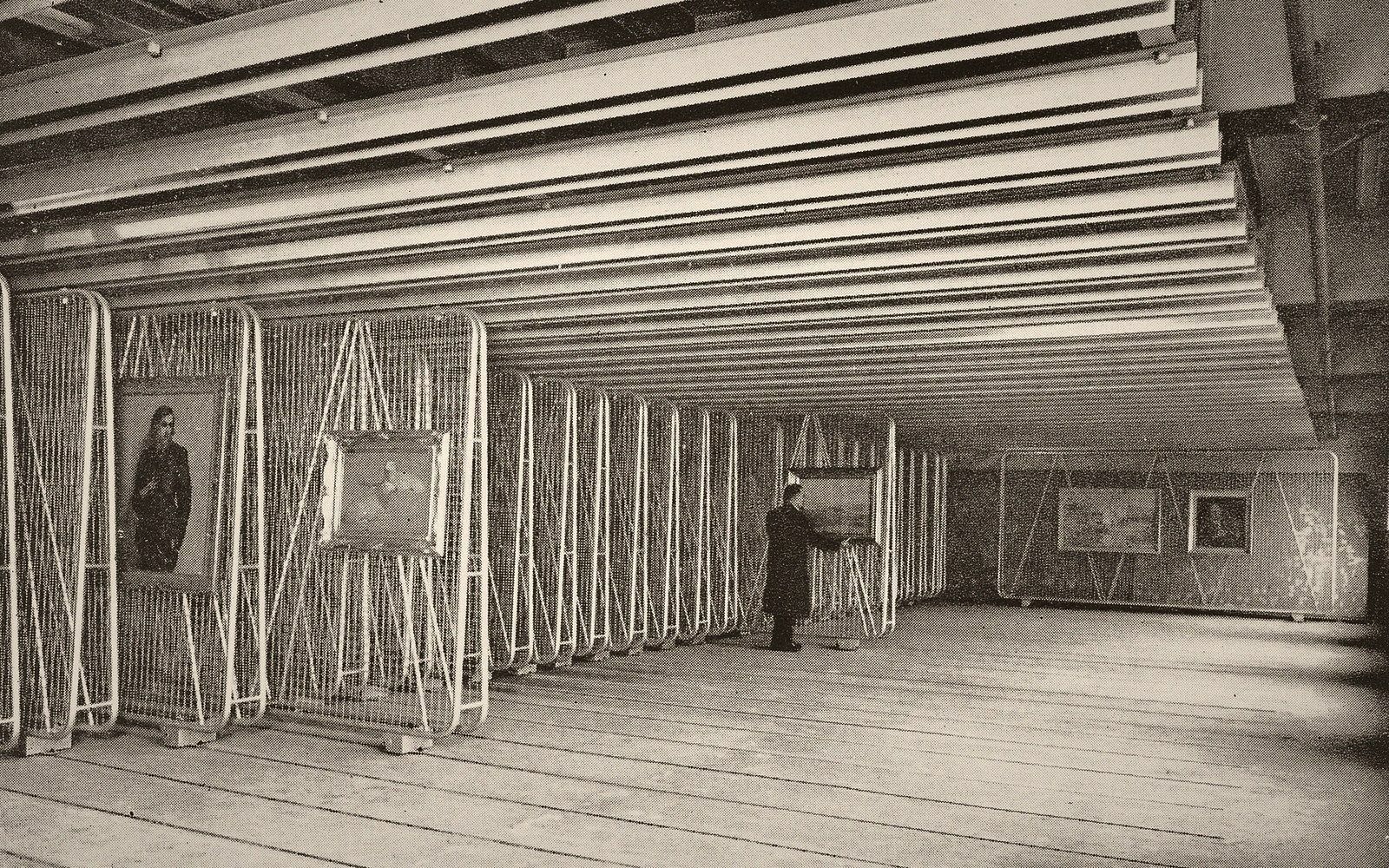
Most of a collection lives on racking like this. The room is designed around retrieval, not display.
Photo: Picture storage racks at the Walker Art Gallery, Liverpool. Wellcome M0015437 · Wikimedia Commons
Doing as little as will do
There is a professional principle, loosely shared across conservation traditions, that the intervention should be proportionate to the need: as little as will do, no more. This is not passivity. Doing as little as will do requires knowing what is happening, which requires monitoring; knowing what will do, which requires materials knowledge and technical skill; and having the discipline to stop there, which is harder than it sounds when the object is already open on the bench. The reversibility rule — that anything done should be undoable by whoever comes next — follows from the same logic: do not foreclose future options because you were impatient with the present problem.
The institution that keeps the environment steady, inspects on schedule, cleans routinely, and calls in a conservator when the monitoring shows early change rather than crisis is the one whose objects will still be in circulation in a hundred years. It will have very little to publish about. That is the measure of success.
Filed in Custody