Reversibility
The rule that conservation should leave the next conservator a way back.
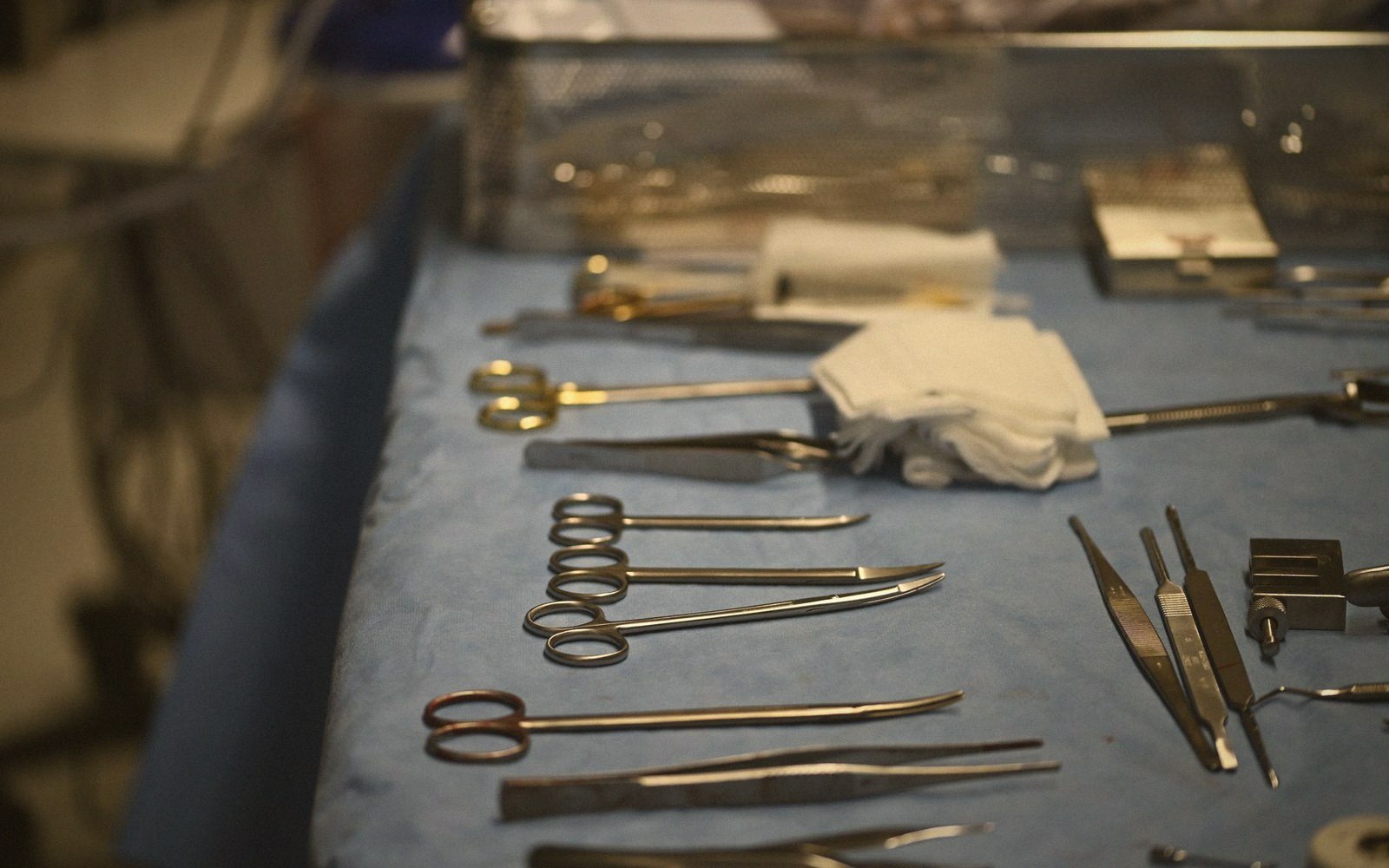
Every material on the tray is chosen partly for how it comes off again.
Photo: Stéf -b. / Pexels
The principle and its weight
Reversibility holds that any material added to an object — adhesive, fill, consolidant, retouching paint — should be removable by a future conservator without damaging the original beneath. The idea formalised in the mid-twentieth century, and it now sits at the centre of almost every conservation ethics code in Europe and beyond.
The logic is honest humility: materials science moves on, understanding of an object changes, and the intervention that looks correct today may look wrong in thirty years. Leaving the door open for whoever comes next is not a counsel of indecision but an acknowledgement that conservation is never final. It connects directly to the legible as new principle — readable repairs and reversible repairs are not the same thing, but they share the same premise: do not close off the future.
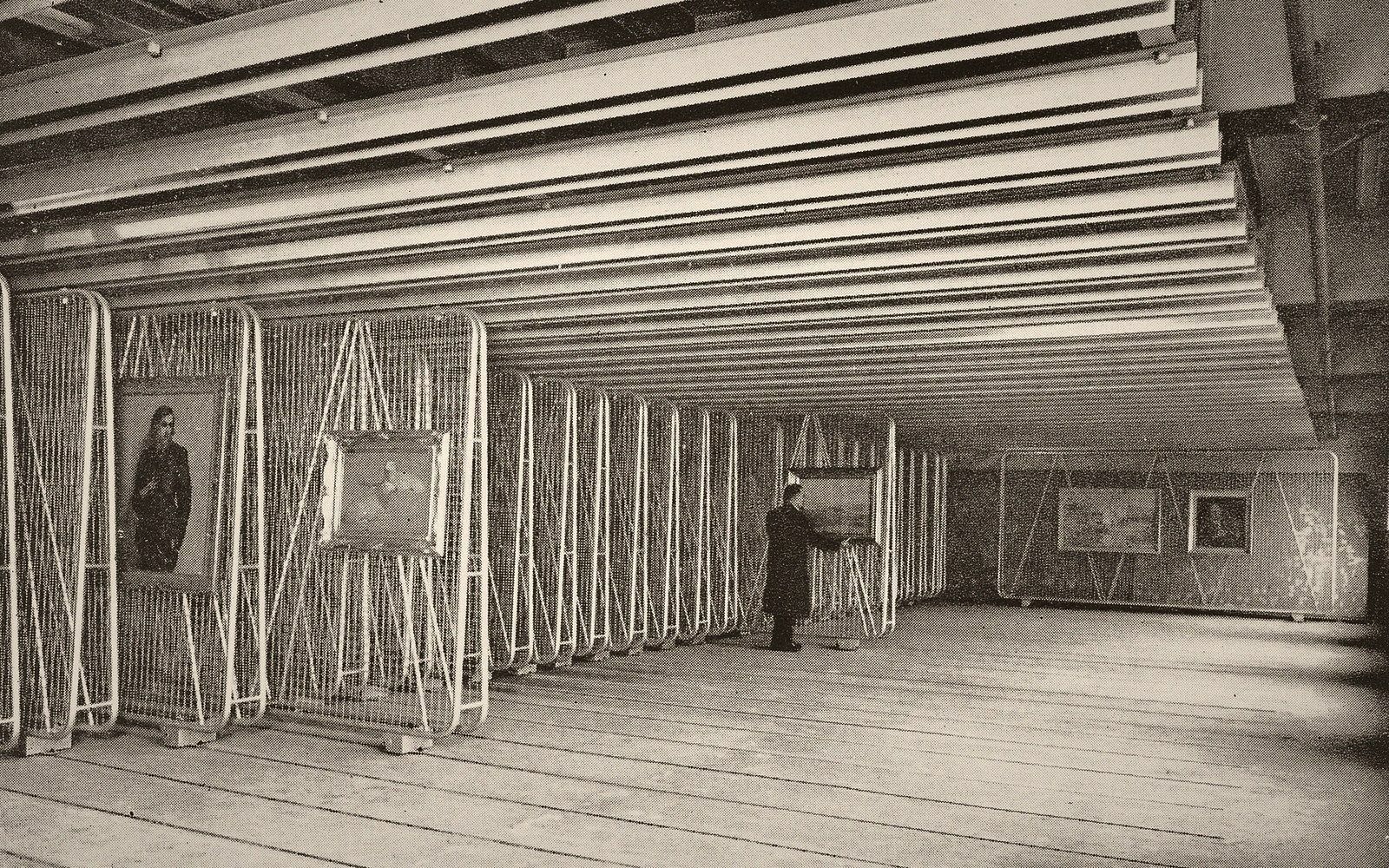
Most of a collection lives on racking like this. The room is designed around retrieval, not display.
Photo: Picture storage racks at the Walker Art Gallery, Liverpool. Wellcome M0015437 · Wikimedia Commons
The word "reversibility" has, however, attracted sustained criticism from within the profession. The objection is that true reversibility is almost never achievable. Any treatment alters the object's condition, however marginally. Solvents used to remove an old consolidant carry some risk of their own; the act of reversal is itself an intervention. What practitioners now tend to prefer is the softer phrase retreatability — meaning that a treatment can be substantially undone at acceptable risk, even if every molecule cannot be recalled.
There is also a tension with stability. Some materials that are easiest to reverse are also less durable; some that are most stable are the hardest to remove later. Choosing a fill or an adhesive involves trading one virtue against another, and the trade is rarely clean.
The rule stands despite these pressures, not because it is perfectly achievable but because it disciplines the conservator's instinct toward permanence. The question can this be undone? is worth asking even when the honest answer is mostlyno.
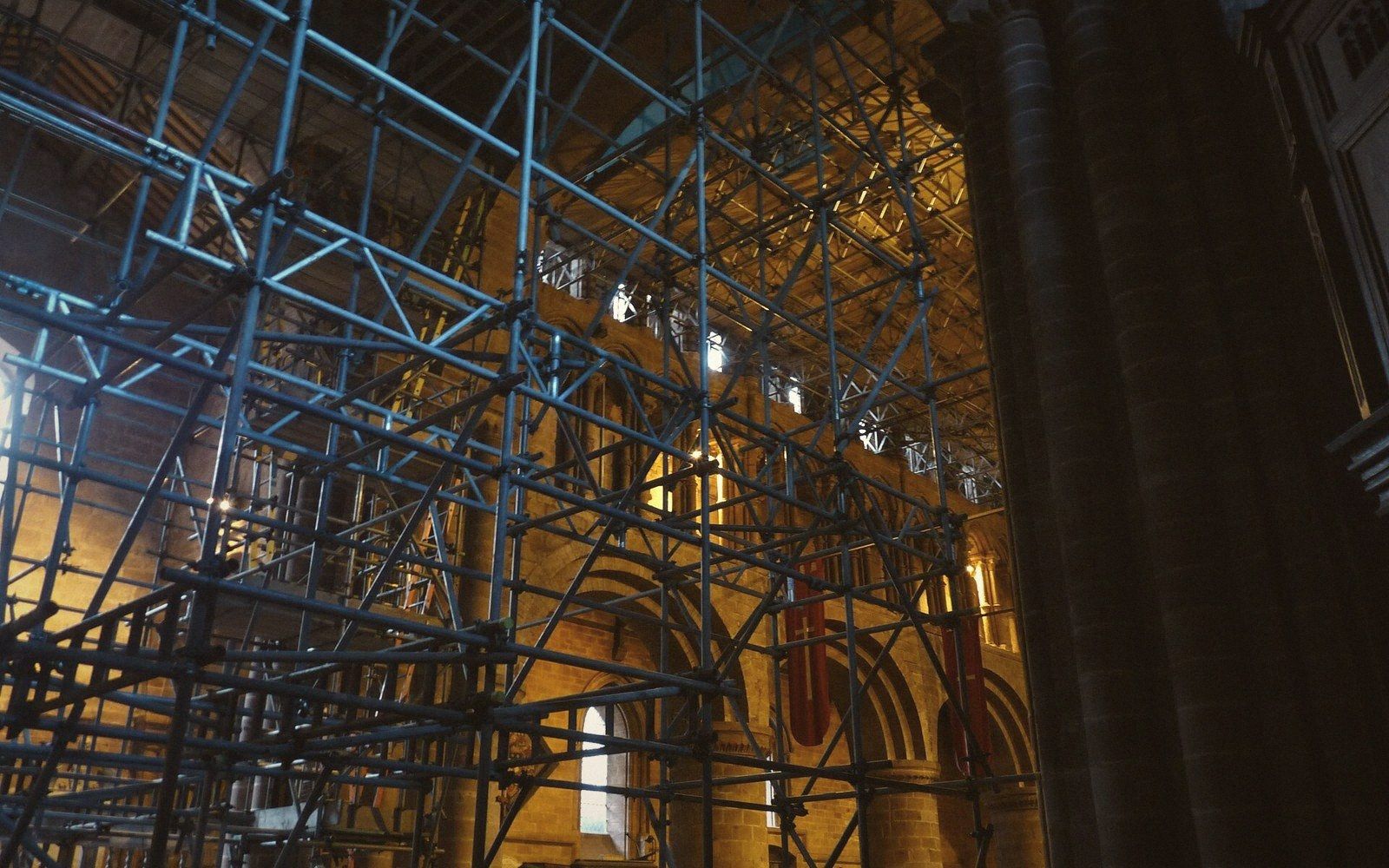
Scaffolding is designed to stand free of the fabric. Nothing structural may lean on the building being repaired.
Photo: St John the Baptist Parish Church, Chester - crossing and east end of nave with scaffolding from north · Wikimedia Commons
Filed in Custody