Light, damp and pests
The three agents that destroy collections — ranked by what they cost to fix. Light fades for good, damp warps and moulds, pests destroy fastest.
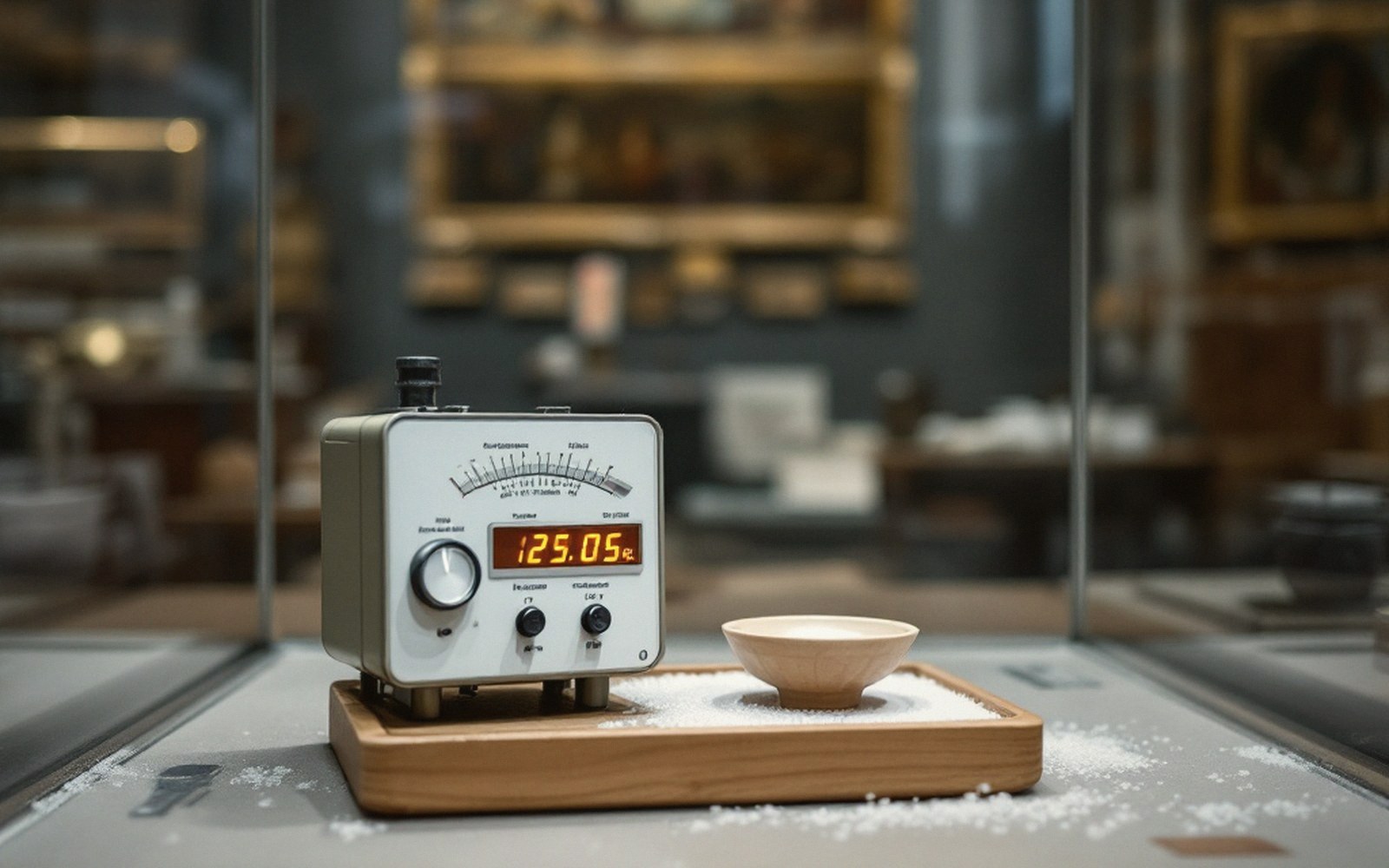
Monitoring is cheaper than any treatment it prevents, and it is the only defence against light.
Conservators sometimes call them the "agents of deterioration," but the useful thing about light, damp and pests is that they work in order of damage done and, roughly, in order of how much reversal costs.
Light is the cheapest enemy to slow and the most expensive to undo. Ultraviolet and visible radiation break molecular bonds in organic materials — dyes, paper, canvas, leather, ivory — and that fading is permanent. No restoration returns a bleached watercolour to its original intensity. The only management is reduction: lower lux levels, UV-filtering glazing, controlled exposure hours. Museums that have switched to LED sources with low UV output have sharply cut their accumulating damage budgets, but the collections already faded before those changes are faded still.
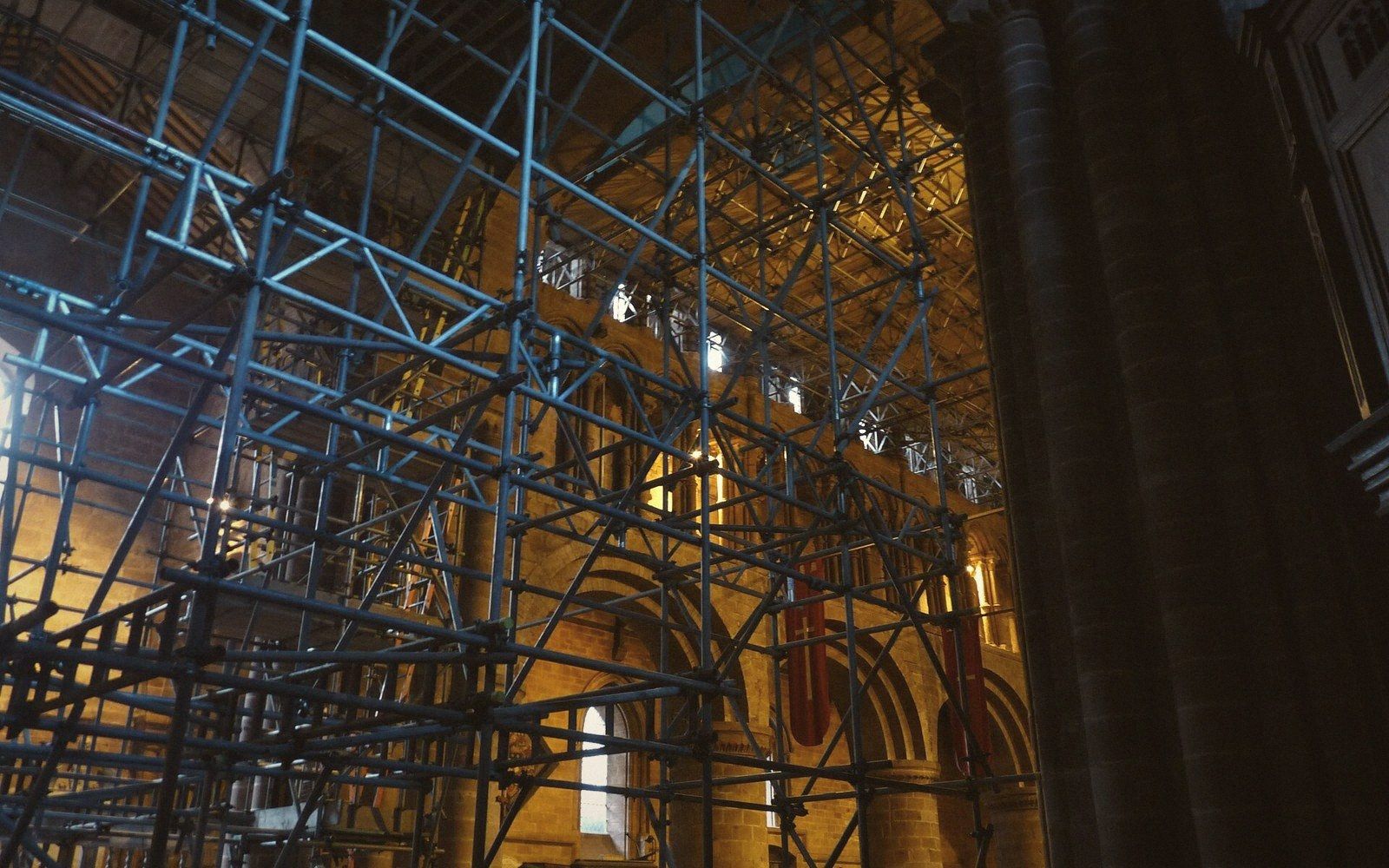
Scaffolding is designed to stand free of the fabric. Nothing structural may lean on the building being repaired.
Photo: St John the Baptist Parish Church, Chester - crossing and east end of nave with scaffolding from north · Wikimedia Commons
Damp is slower and more varied. Relative humidity above about 65 percent encourages mould on paper, canvas and textile; it corrodes metal; it swells and splits wood. Persistent fluctuation — the morning chill in a church that heats for Sunday services, then cools again — does more structural damage to panel paintings and polychrome sculpture than a stable humidity somewhat outside the ideal range. Repairing the split panel, consolidating flaking paint, treating active mould: all of these are expensive and intrusive, and the principle that repairs should be readable as repairs rather than concealed means the object carries its damage history permanently.
Pests come third in frequency but first in the speed of destruction once an infestation is established. Woodworm (Anobium punctatum) can hollow a structural member in a few seasons; textile moths reduce embroidery to fibre dust; rodents destroy archival collections. Integrated pest management — sticky traps, environmental monitoring, strict quarantine on objects entering a store — is now standard, and it is largely unglamorous maintenance work. The cost of missing it is a collection or a building that cannot be repaired.
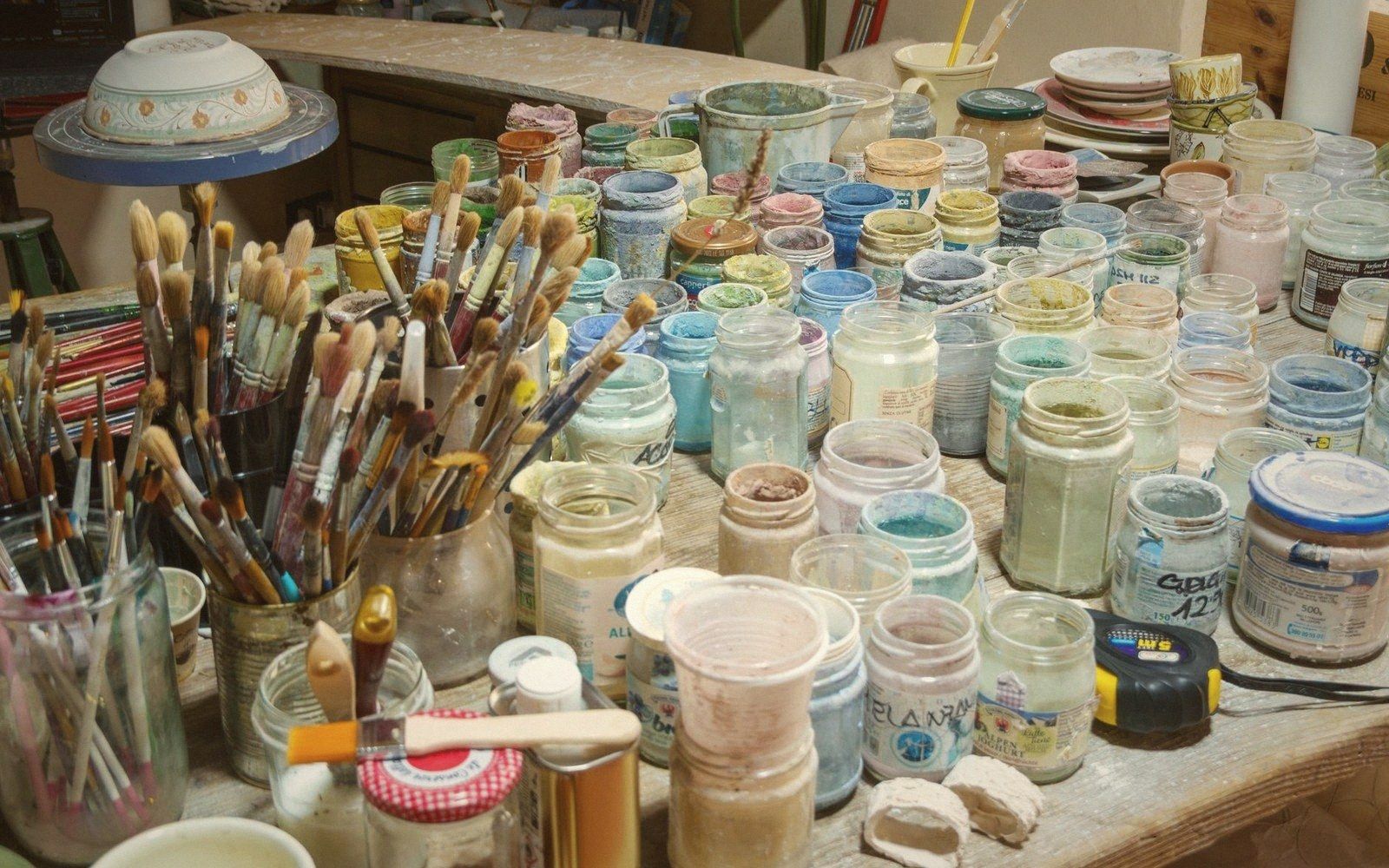
A retouching tray is a short history of what a studio could buy. Several of these colours are no longer manufactured.
Photo: tommy picone / Pexels
Filed in Custody