Services in old walls
Why cutting channels in old walls for wiring and heating does harm, and how surface routing and lime-friendly underfloor heating protect historic fabric.
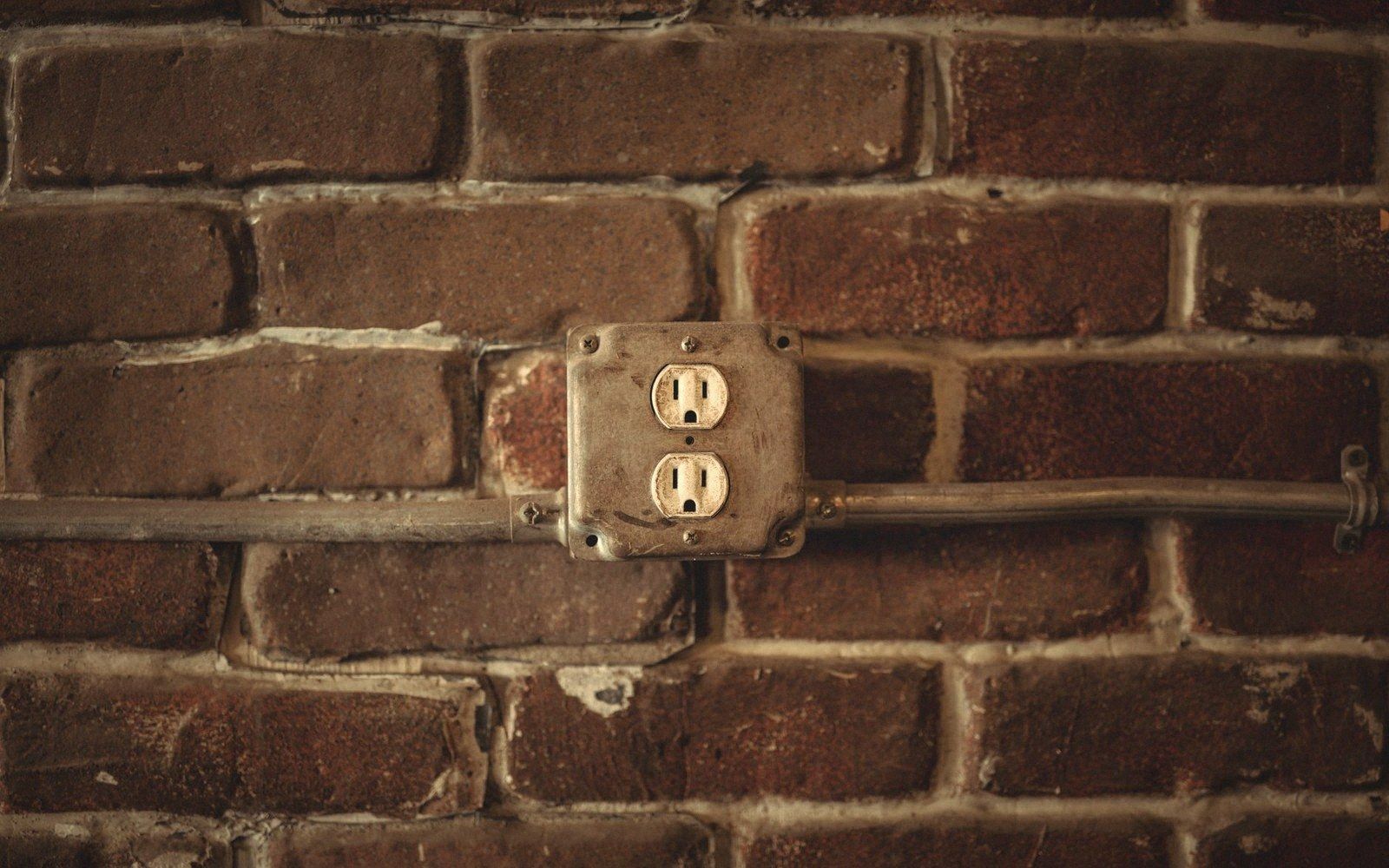
Surface-run conduit is the conservator’s answer to wiring: it can be traced, altered and taken out.
Photo: Benjamin Farren / Pexels
Old walls — rubble-core masonry, lime-mortared brick, cob, early concrete — are not just thick. They are active. They breathe moisture in and out through thousands of small pathways; cut a channel in them, bed in a plastic conduit and fill the slot with cement, and you seal those pathways, concentrate moisture, and invite spalling, staining and eventually structural movement. In a listed or scheduled building, you may also be committing an irreversible alteration to historic fabric. The tradespeople brought in to run a new boiler circuit or install downlighters are rarely told any of this.
The fundamental rule — recognised in most national guidance on historic buildings, from English Heritage's technical advice series to the French monuments historiques protocols — is surface routing wherever possible. Cables and pipes run in surface-fixed trunking or cleated directly to wall faces; they remain visible, they can be removed, and the wall behind is untouched. The objection is aesthetic. The answer is that well-chosen trunking, in timber or in moulded profiles sized to match existing architrave or dado rails, disappears into a room far more readily than a bad repair. Period details were themselves bold and surface-mounted by modern standards: a timber cable run at chair-rail height in an eighteenth-century interior is not the intrusion it first looks.
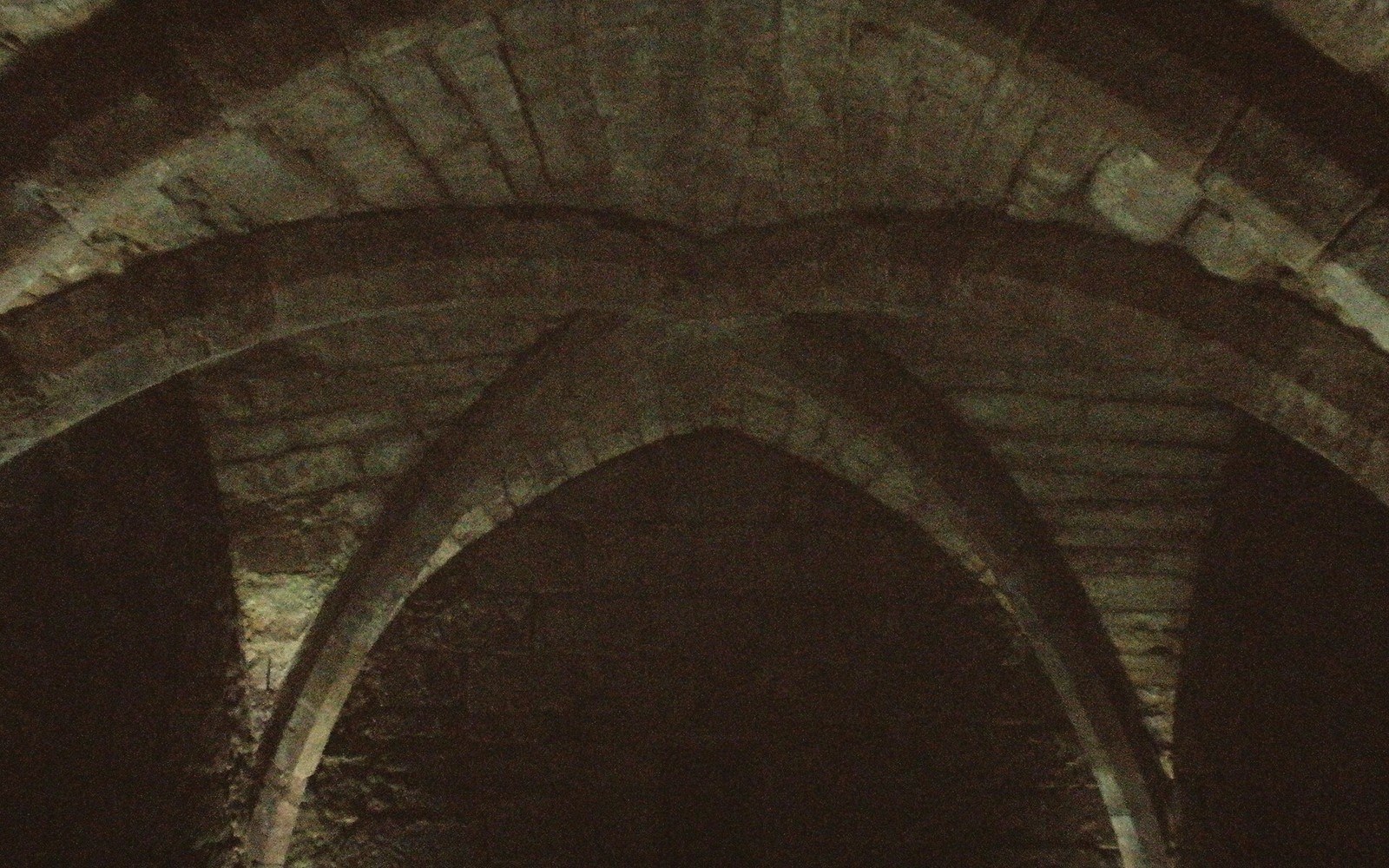
The vault is often the oldest surviving room in a building: it was built to carry weight, so nobody ever needed to alter it.
Photo: Medieval Cellar beneath 38-39, Bayley Lane. Coventry. Vaulted ceiling looking South. · Wikimedia Commons
Underfloor heating, where a ground-level floor needs relaying regardless, is often the least damaging route for warmth in a stone or brick building: it raises air temperature without requiring pipes in walls at all, and a lime screed over low-temperature pipework is compatible with movement in old structures in a way that cement is not. Radiators hung on surface brackets, fed by exposed pipework running at skirting level, are another workable solution. Neither is invisible; both are reversible — the principle that anything done to historic fabric should be undoable applies as much to plumbing as to any repair.
Lighting in vaulted or beamed ceilings poses its own version of the same problem: drilling through a medieval timber or a carved stone boss to thread a cable is an irreversible act on a unique object. Track systems fixed to the surface of a beam, or tension-wire systems spanning between fixed points, deliver what modern use demands while keeping the saw out of something that cannot be uncut.
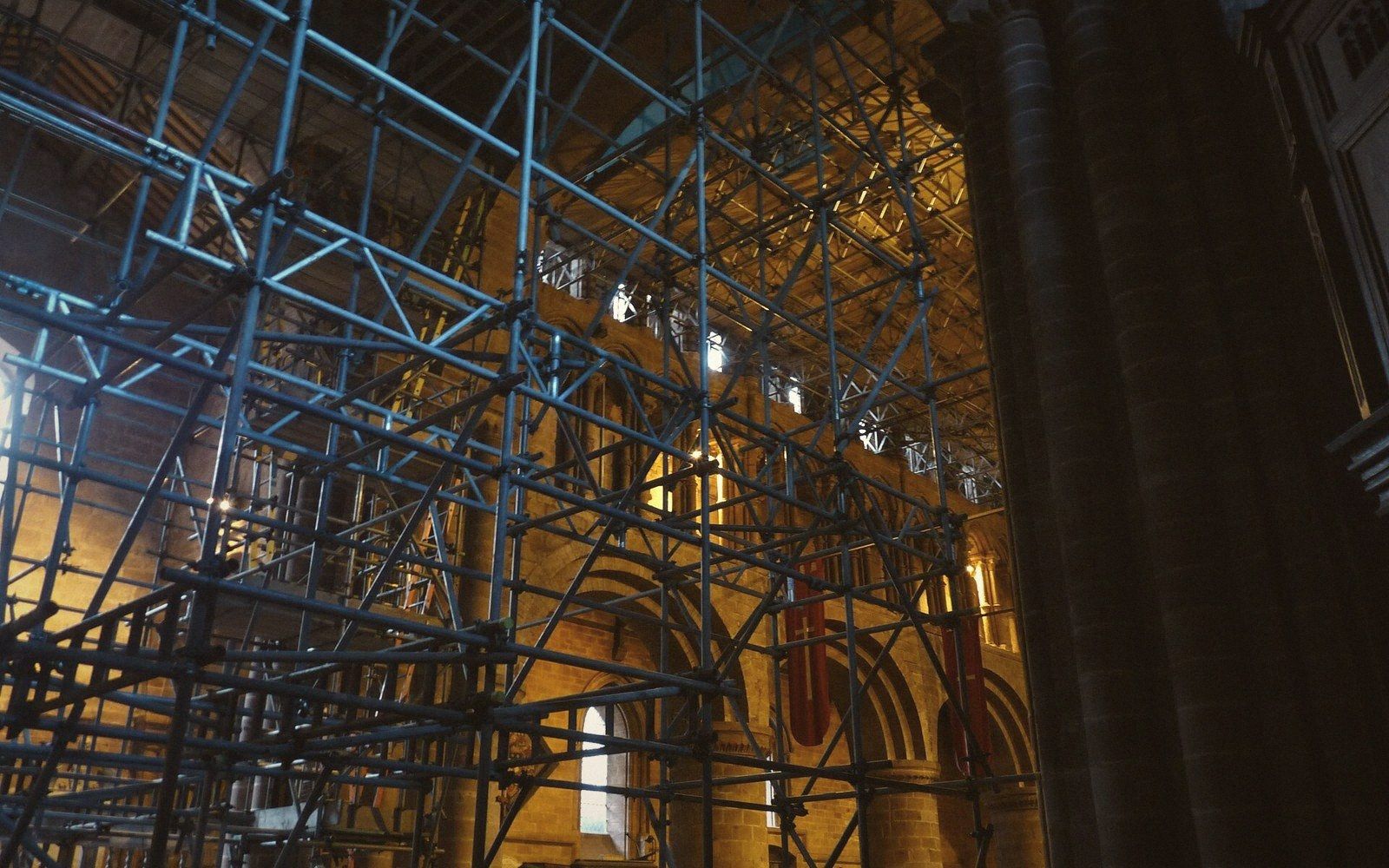
Scaffolding is designed to stand free of the fabric. Nothing structural may lean on the building being repaired.
Photo: St John the Baptist Parish Church, Chester - crossing and east end of nave with scaffolding from north · Wikimedia Commons
The broader discipline is not mysterious: establish what the fabric is, understand how it moves and breathes, and design the service route around it rather than through it. Most damage in this category is not the result of malice — it is the result of nobody asking the question before the chase was cut.
Filed in Fabric