The roof first
A building without a roof is not a building in trouble. It is a building that has already lost.
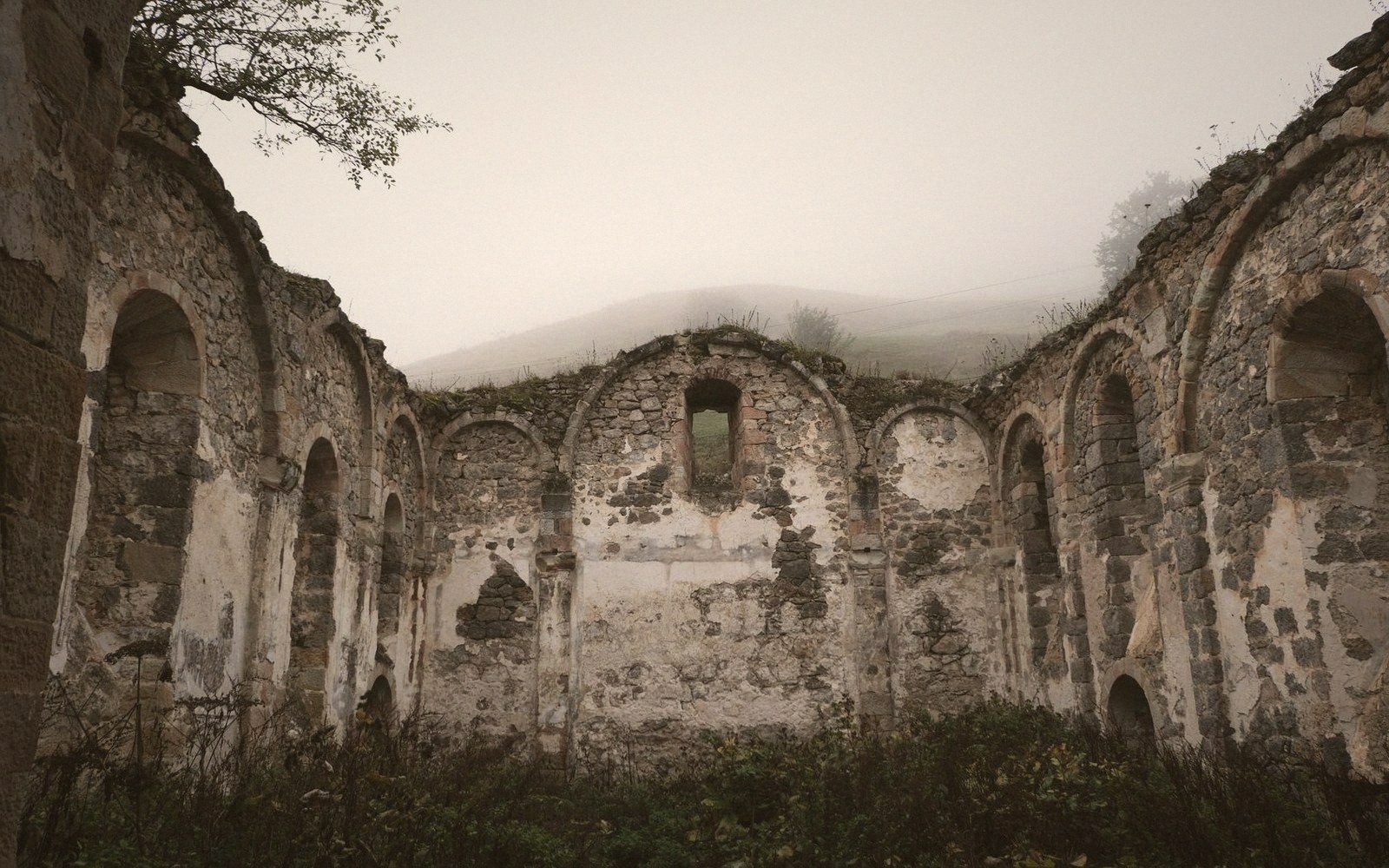
Once the roof is off, everything under it is on a clock. Every other repair waits for this one.
Photo: Altuna / Pexels
Why sequence is everything in repair
Almost every ruin in Europe traces back not to war, earthquake or neglect in any grand sense, but to a single mundane failure: the roof gave way and nobody fixed it. Once water enters from above with nothing to slow it, the sequence is mechanical. Moisture works into the wall heads. Frost expands in the joints. Timber lintels soften, sag and go. Internal floors follow. Within a generation, a structurally sound building can become an open shell, and within two it can become rubble. The cause of death in most cases was not old age. It was a slipped lead flashing, a failed parapet, a gutter blocked long enough to overflow.
This is why experienced conservation surveyors tend to insist on a hierarchy that sounds almost dismissive in its simplicity: roof first, water second, everything else after. The logic is not aesthetic but thermodynamic. A building held dry stabilises. Its stonework stops spalling, its plaster stops blowing, its embedded timbers stop decaying. Nothing else done to that building — repointed joints, repaired windows, renewed floors — will last if the envelope above it is still letting water through. Remedial work done in the wrong order is work that will need doing again.
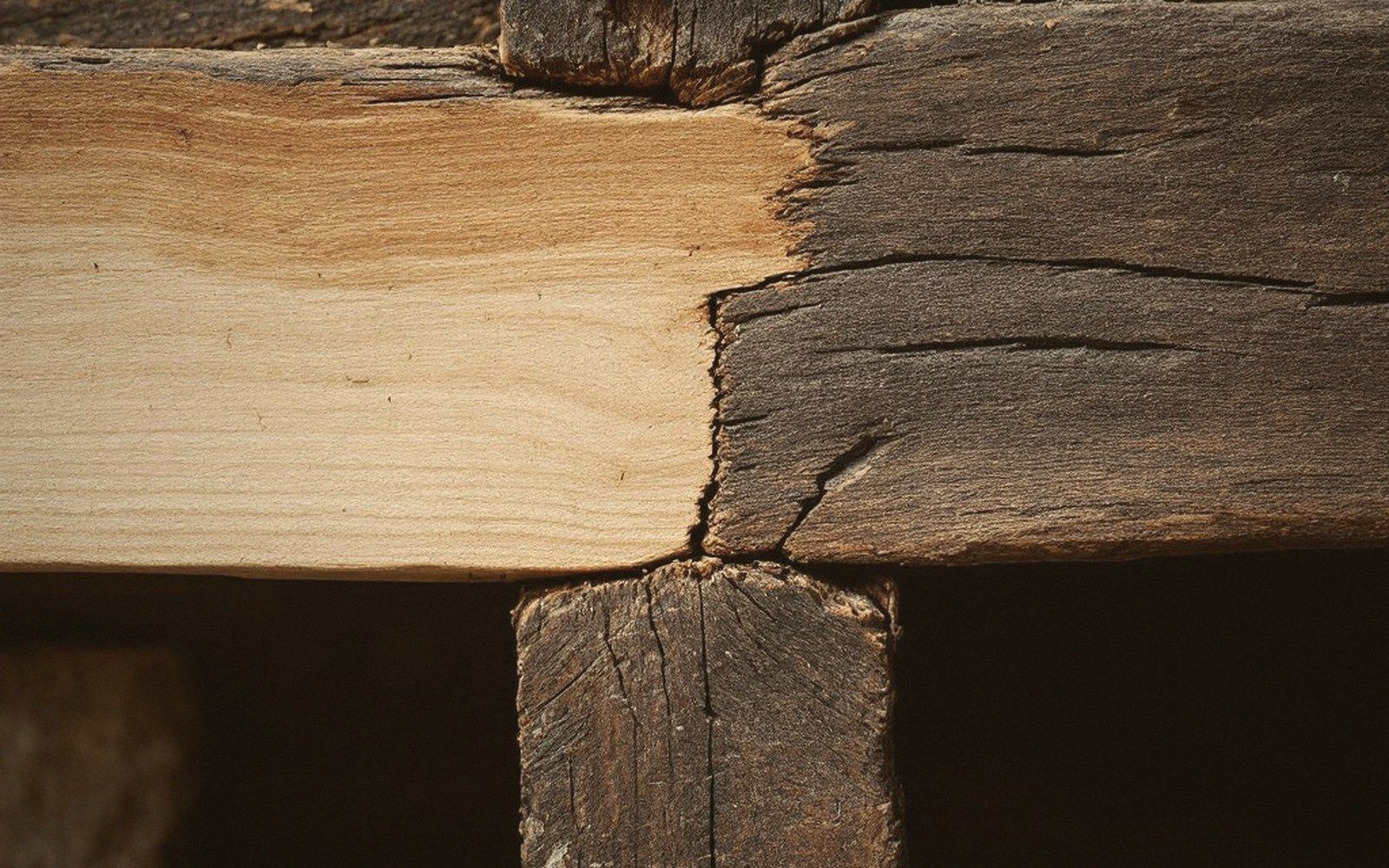
A scarf joint lets new timber into an old beam instead of replacing it. The new wood is left pale so the repair stays readable.
The principle has a particular sharpness in the repair of roofless ruins, where the temptation is often to consolidate the picturesque fragments — the standing gable, the carved doorway — before addressing how water is still sitting in the core of every wall. Stone consolidants and repointing mortars applied to a wall that is seasonally saturated simply fail faster than if nothing had been done. Capping a wall, even crudely, with a temporary lime render or a sacrificial tile course gives the masonry below it a chance to dry out and restabilise before any skilled work begins. The hierarchy does not change for ruins; it becomes, if anything, more urgent.
Funding pressures work against the sequence. Emergency grants tend to release money for visible, demonstrable work — the window restored, the vault stitched — rather than for a new roof covering that, once finished, disappears from view and is hard to photograph for a report. The result is a long-standing pattern, well recognised by conservation officers, in which the interesting stone gets conserved and the lead above it gets deferred, and in five years the stone has to be conserved again.
The trades that matter first in any repair sequence are not the glamorous ones. They are the leadworkers, the slaters, the masons who can read a wall head. Get the roof on. Everything else waits.
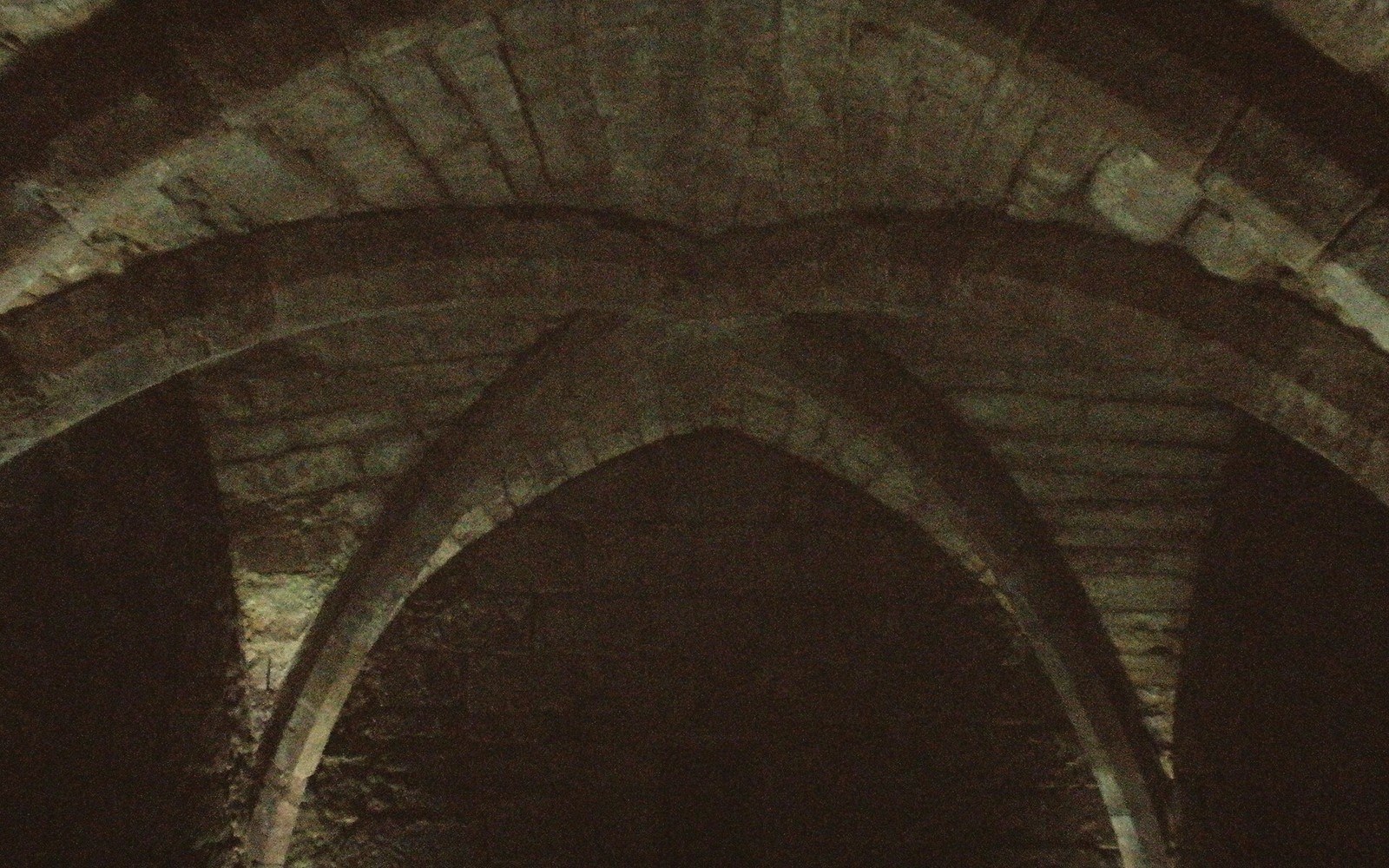
The vault is often the oldest surviving room in a building: it was built to carry weight, so nobody ever needed to alter it.
Photo: Medieval Cellar beneath 38-39, Bayley Lane. Coventry. Vaulted ceiling looking South. · Wikimedia Commons
Filed in Fabric