The trades that survived
Five crafts that never quite disappeared, and why
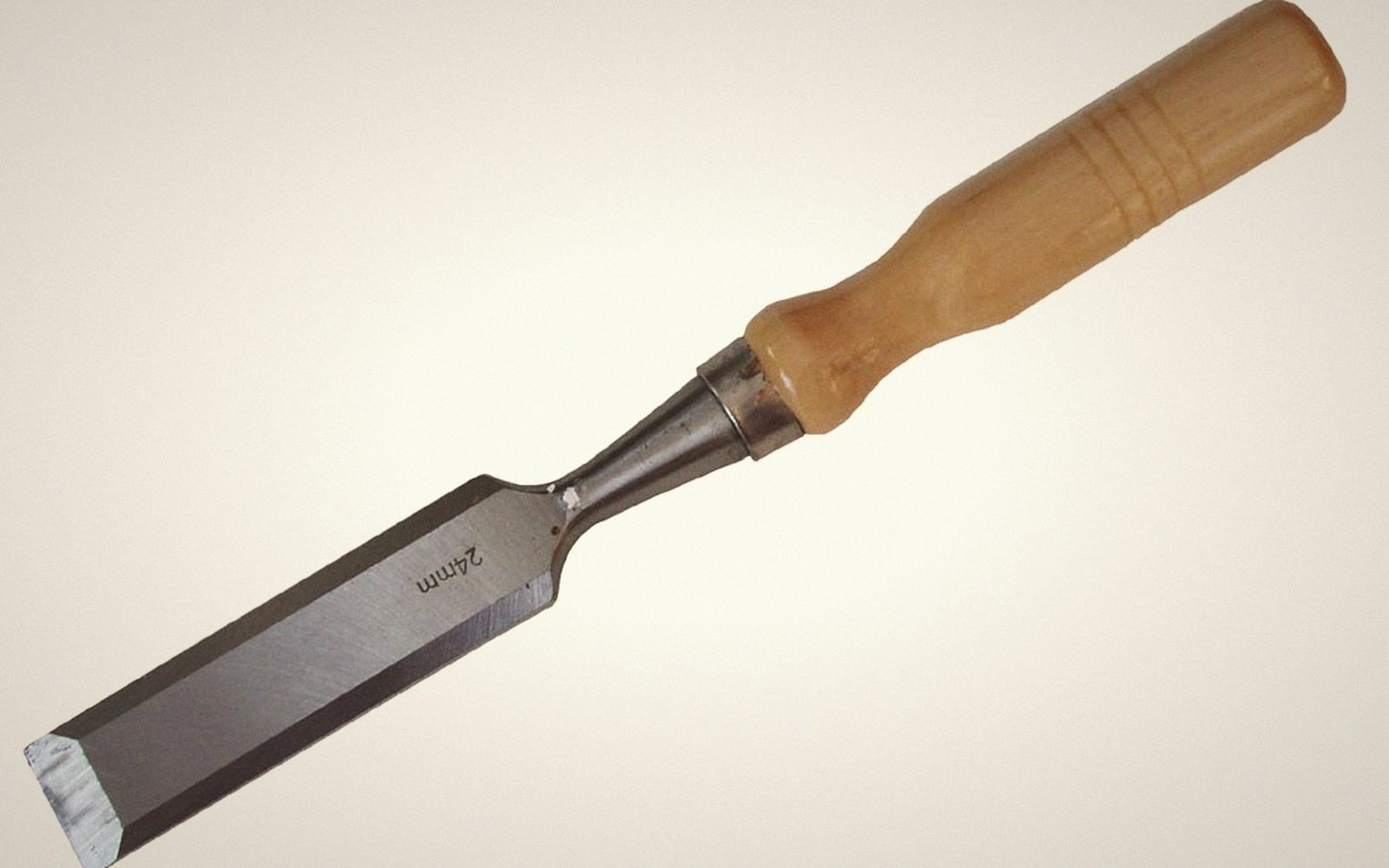
A carving chisel is ground to the work in hand. The bevel is part of what an apprentice learns to read.
Photo: Chisel wood 24mm · Wikimedia Commons
The question is never whether a craft died — it almost never does, entirely. The question is whether enough of it stayed alive to train the next person. Stone carving, lime plastering, stained glass, thatch, bell founding: five trades that look precarious on paper but have each found the narrow conditions under which they persist.
Those conditions are less romantic than the trades themselves. A craft survives where repair work arrives steadily enough to keep one practitioner employed across a full year. A cathedral with a rolling programme of stonework will sustain a banker mason on site; a region where thatched buildings are thick enough on the ground will support a thatcher who moves between them without a gap in income. The moment that density drops below a working threshold, the trade does not crash — it thins. One person retires and nobody was in training behind them.
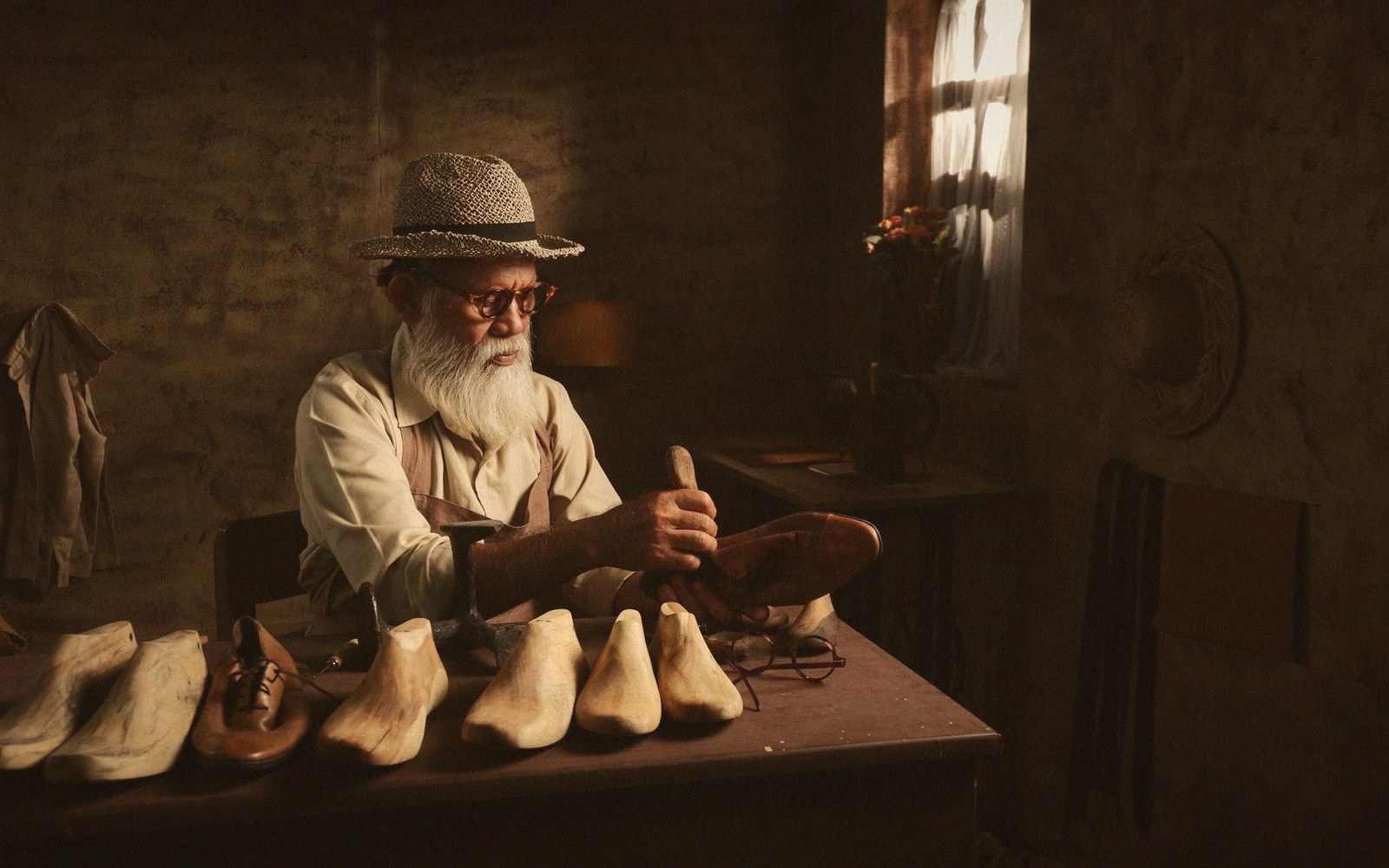
The last is cut before the shoe is. It outlives the pair made on it, and usually the maker.
Photo: Muhammad Rasyad Indra Putra / Pexels
The five, briefly
Stone carving holds on most visibly in cathedral workshops. The lodges at York Minster, Wells, Salisbury and a handful of Continental equivalents still take apprentices, still cut new stone to match medieval profiles, still use drawings fixed to the banker — the mason's heavy work table — as they always were. The depth of the carving tradition there is not nostalgic; it is structural. A building that cannot be repaired in kind will eventually be repaired in the wrong material, and that failure tends to cost more to reverse than the original saving was worth.
Lime plastering nearly vanished in the third quarter of the twentieth century, when the industry standardised around gypsum and hard cement. It survived in pockets: conservators who needed it for historic interiors, a few plasterers who had simply never switched. The revival since the 1990s is real but uneven. Where it has recovered fastest, the driver is usually the listing of old buildings and the growing recognition — after expensive cement failures — that lime does not behave like cement and cannot simply replace it.
Stained glass never lost the institutions that carry it. The large atelier model — a workshop with a designer, a glass painter and a glazier, each distinct — persists in France, Germany and Britain. Restoration work feeds much of it, but new commissions in contemporary idioms keep the design intelligence alive; the trade that only repairs will eventually run out of ways to transmit its judgement about colour and light. The German tradition of mouth-blown antique glass, made in the same way since the medieval period, is maintained by a handful of manufacturers, and restorers insist on it where the original was mouth-blown.
Thatch is geographically concentrated, which is both its vulnerability and its protection. In Britain, it clusters in a loose diagonal across East Anglia, the South-West and parts of the Midlands. In the Netherlands, along the Zaan and in Friesland. In Denmark, across the island farmsteads of Funen. Each regional tradition has its own materials — long straw, water reed, combed wheat reed — and its own fixing methods. The apprentice relationship here is often informal, closer to a simple apprentice-to-master arrangement than to any formal guild, and the knowledge of regional variation is one of the things most at risk when a practitioner leaves without having passed it on.
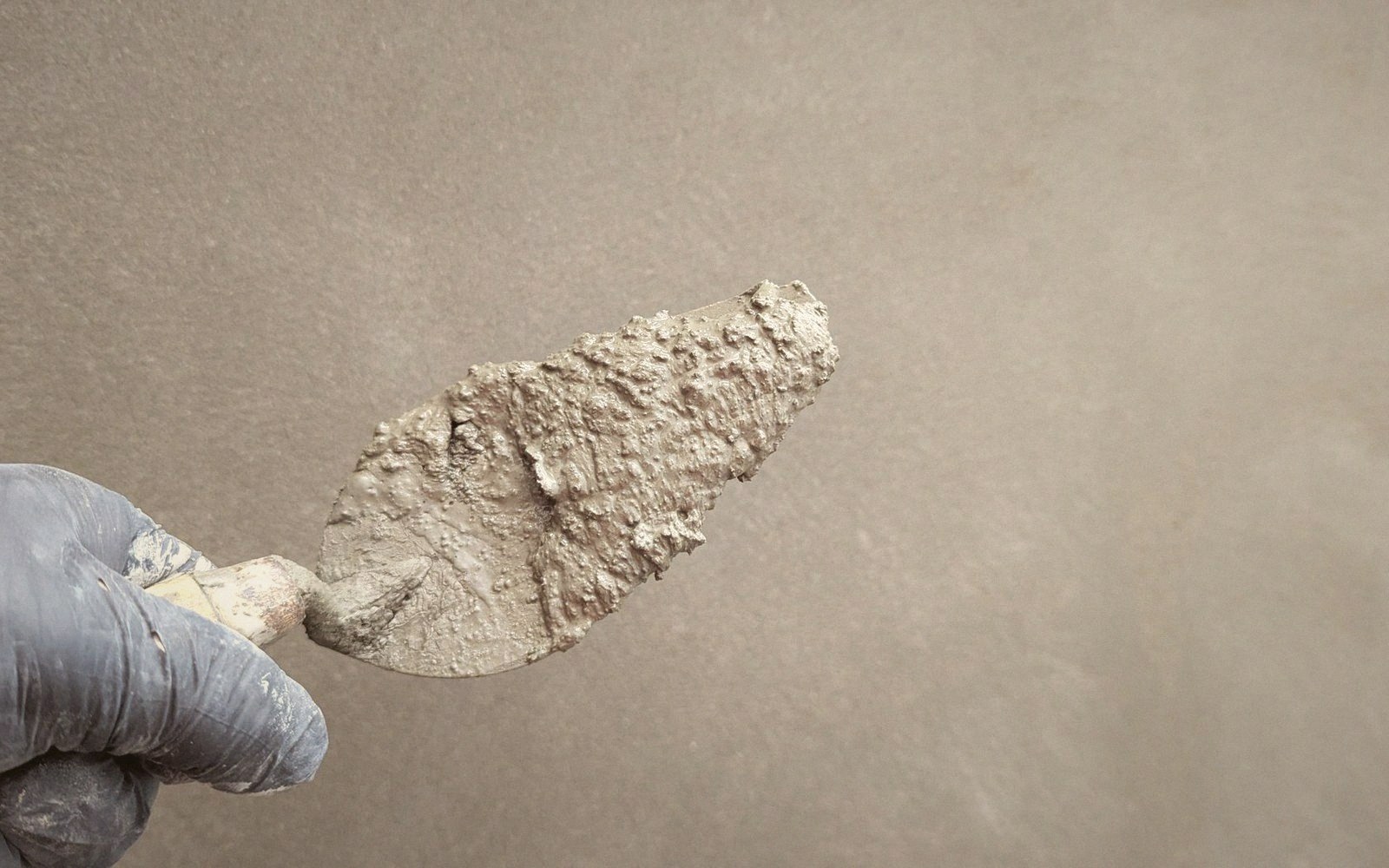
Lime is floated on in thin coats and left to carbonate over months. The slowness is the method, not a defect in it.
Photo: David Antonio Cruz Naira / Pexels
Bell founding is perhaps the most precarious of the five because it requires the most capital: a furnace, pit moulds, bronze, a factory of some scale. There are fewer than a dozen working bell foundries in Western Europe. One of the oldest still in operation is Petit & Fritsen in the Netherlands, with origins in the seventeenth century; in Britain, the Whitechapel Bell Foundry operated in East London from 1570 until 2017, when it closed. The trade continues — bells are still cast and hung — but the margin between continuation and disappearance is thin, and a single foundry closure removes both a manufacturing capacity and an irreplaceable archive of tuning knowledge.
What all five share is that they cannot be learned from a manual. They are transmitted through doing, and they persist only where the doing does not stop.
Filed in Hand