Apprentice to master
A craft vocabulary has no textbook. It lives in the hands of whoever taught the person who taught you — and when one generation doesn't pass it on, the next starts from nothing.
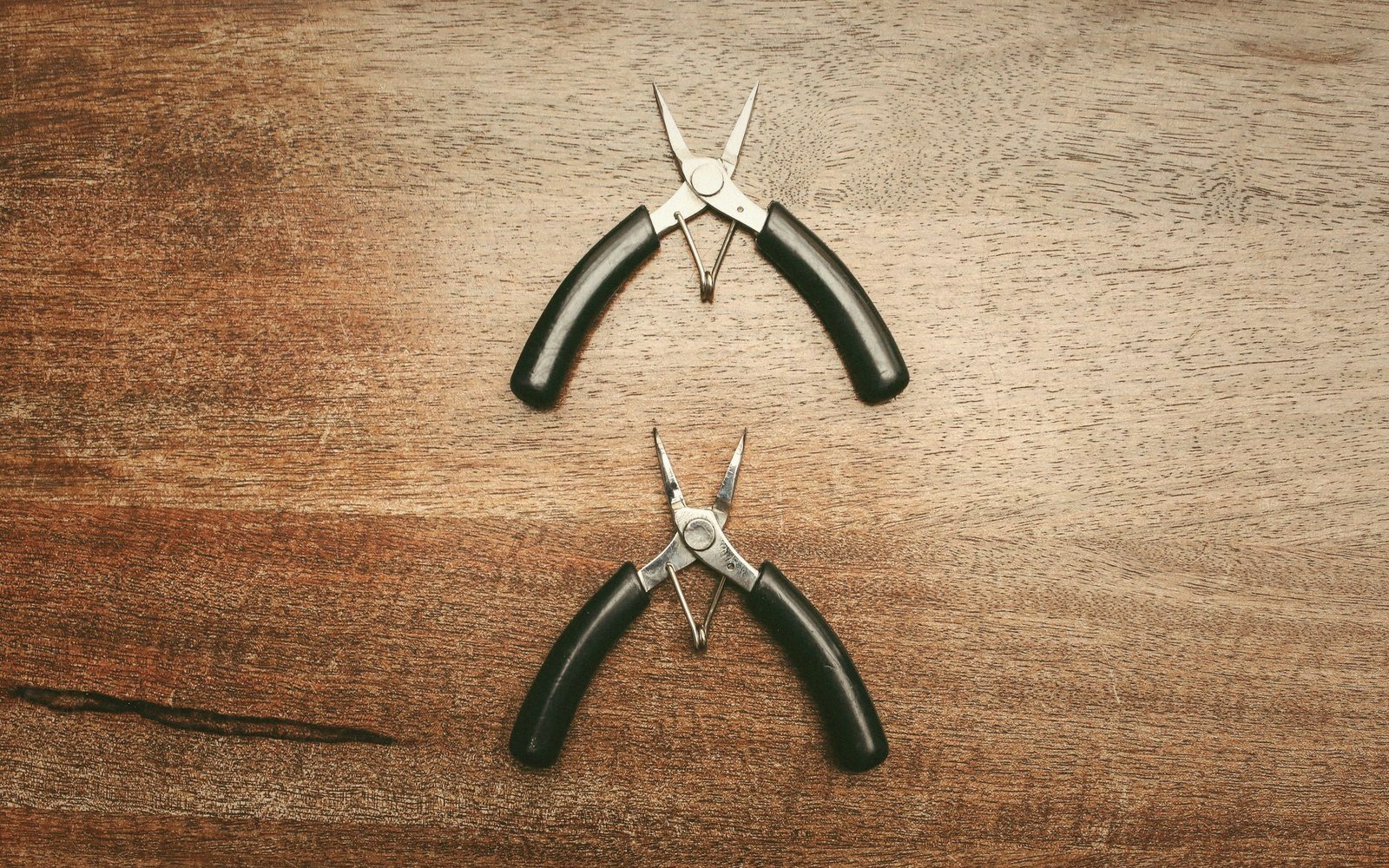
Two benches, one job. The vocabulary was never written down, so it moves by working alongside.
Photo: Polina Tankilevitch / Pexels
The chain and what it carries
Lime plastering, stone carving, thatch, traditional gilding: every one of these trades survived long periods of low demand not because the techniques were written down adequately, but because at least one practitioner kept working and kept teaching. The knowledge that travels through that chain is not just a sequence of steps. It is calibration — the particular resistance of a lime mix at the right moment to work it, the angle at which a chisel begins to skate on limestone — things that a manual can describe but cannot transmit.
The apprentice relationship front-loads the hardest learning into repetition. You prepare materials before you are allowed to use them. You watch the same action done correctly until the wrong version looks obviously wrong to you. By the time you attempt it yourself, your hands already know the shape of failure. This is not mysticism; it is how motor learning works.
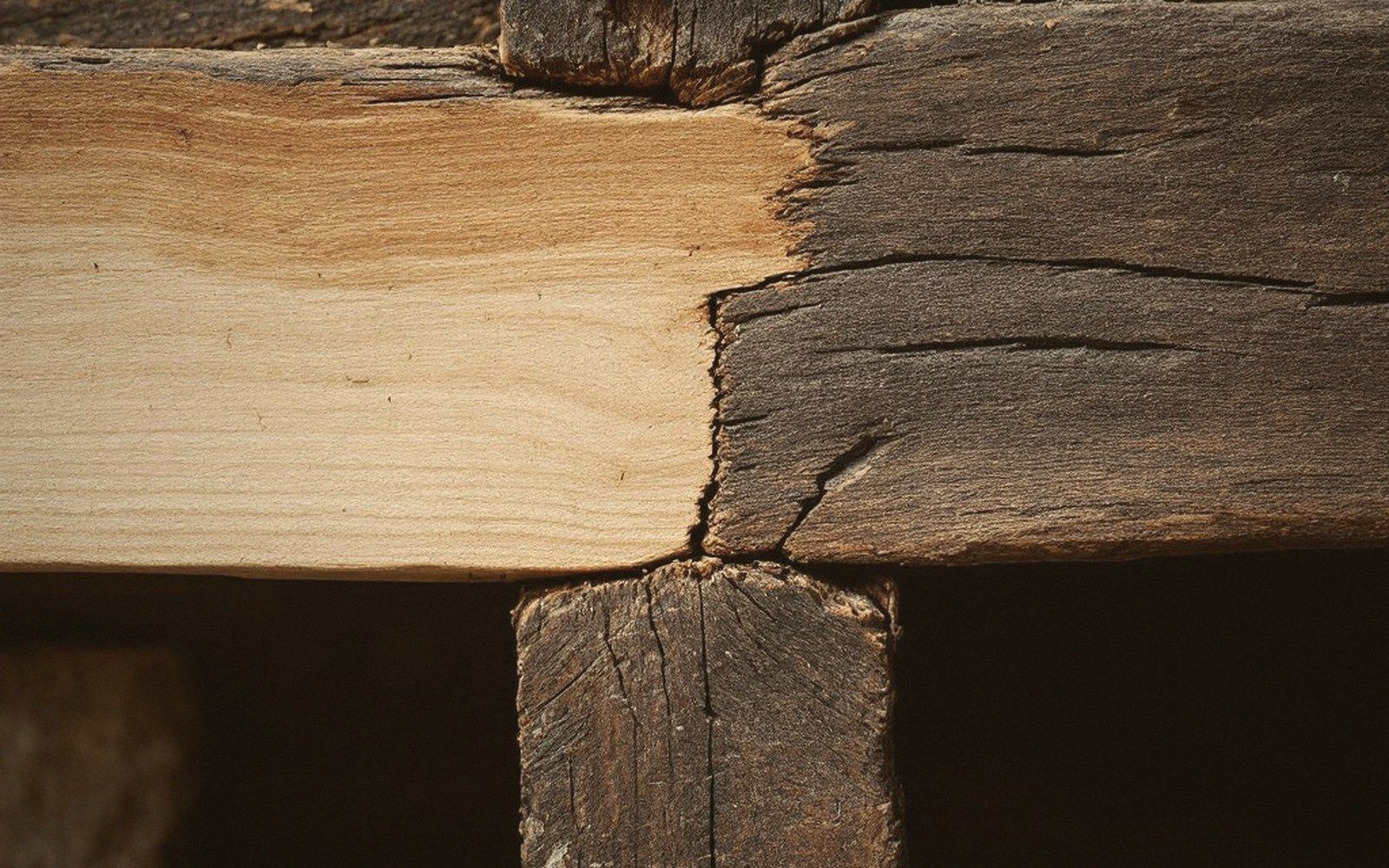
A scarf joint lets new timber into an old beam instead of replacing it. The new wood is left pale so the repair stays readable.
What gets lost when the chain breaks is exactly this pre-verbal knowledge. A new generation can find archives, photographs, even footage, and reconstruct a plausible sequence. But reconstruction without a living corrective produces work that is technically coherent and subtly wrong — a difference visible to a trained eye and devastating to old fabric that has to live alongside the repair.
The break usually happens during a period when demand for the trade collapses. It takes roughly one working generation for the last active masters to retire and disperse, for their tools to reach dealers and collections, and for the institutional memory of who trained with whom to fade. Revivals after such a break require extraordinary effort: seeking out surviving practitioners in adjacent countries, running intensive residencies, accepting that the reconstituted knowledge is an approximation that will take another generation to stabilise.
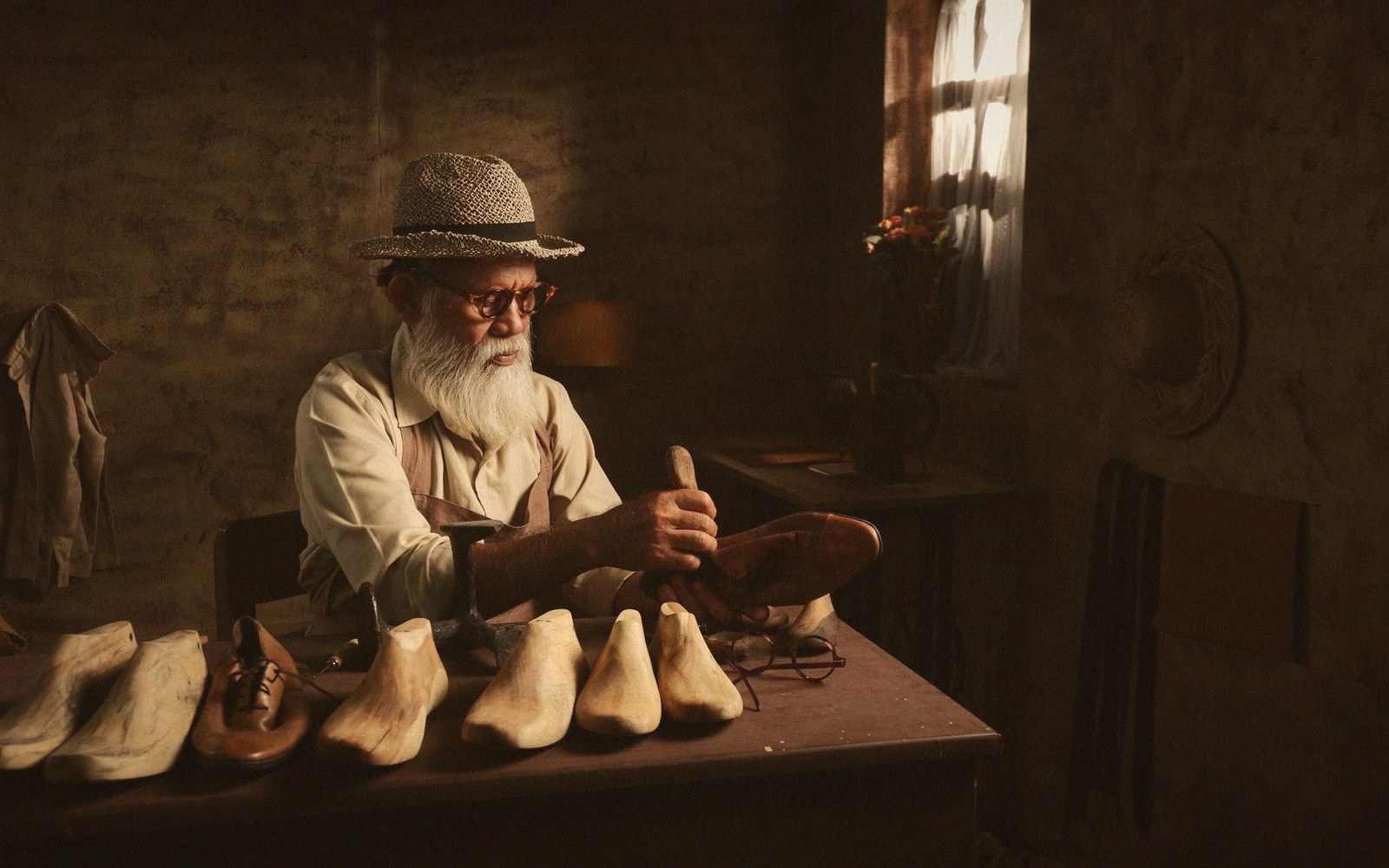
The last is cut before the shoe is. It outlives the pair made on it, and usually the maker.
Photo: Muhammad Rasyad Indra Putra / Pexels
Some countries have formalised protection against this. France's Maîtres d'art programme pairs endangered-craft masters with funded apprentices specifically to prevent generational rupture. Germany's guild system has kept certain trades in continuous transmission longer than market forces alone would have sustained them. In Britain, the picture is patchier. Survival depends heavily on whether a building programme — a cathedral campaign, a sustained restoration contract — happened to be running at the right moment.
Filed in Hand