Tools that outlive trades
When the last practitioner dies, the tool becomes a riddle.
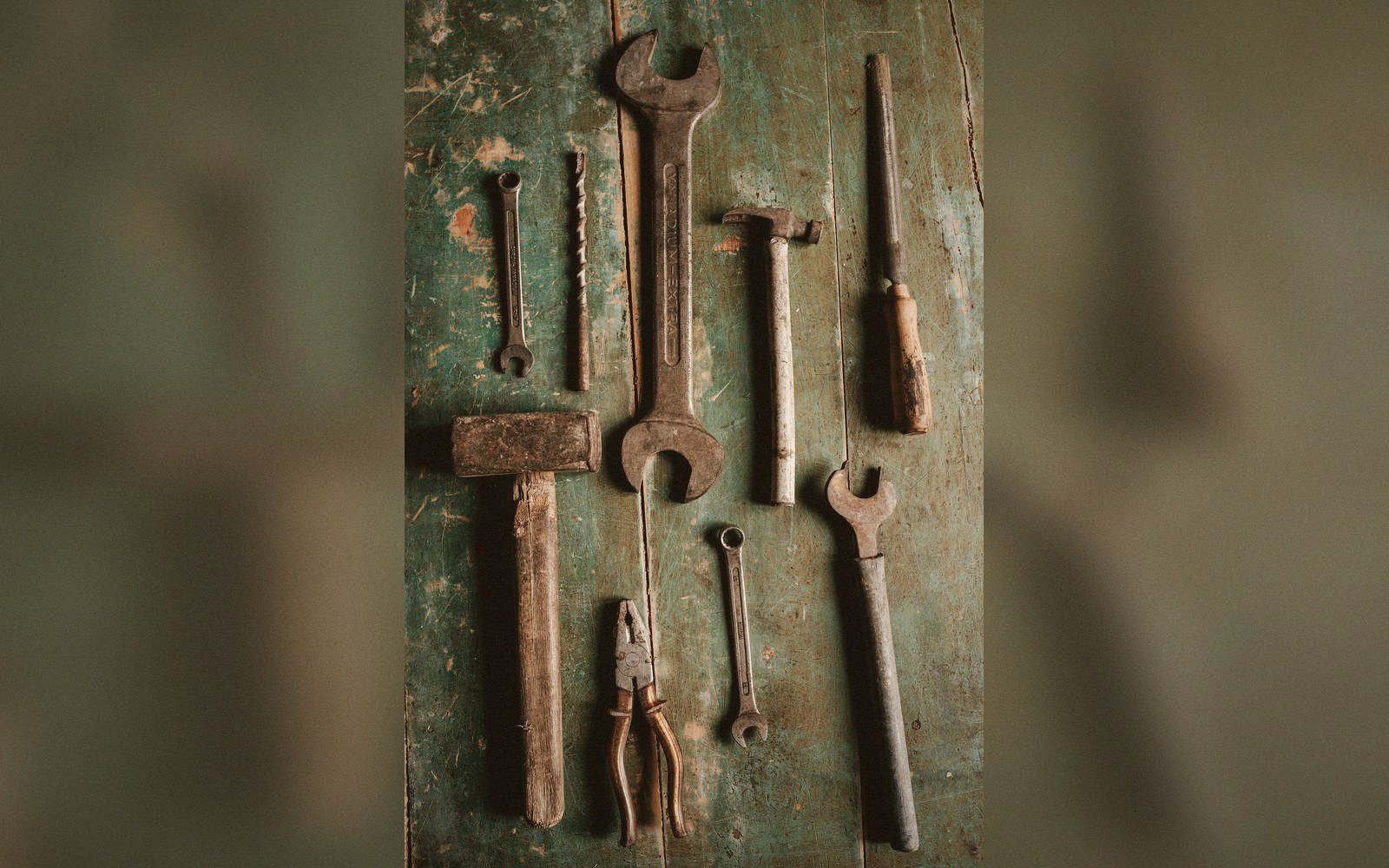
The tool survives; the job it was made for does not. Collections hold thousands of objects nobody can now name.
Photo: Collection of assorted hand tools arranged on rustic wooden surface in workshop · Wikimedia Commons
The orphaned object
A museum store in any European city of sufficient age will hold tools no curator can fully explain. Not damaged, not incomplete — simply outlived. The craft they served closed before anyone thought to write down what the tool did, in what sequence, with what material. The object survives; the knowledge does not.
This is not a small category. Collections assembled in the nineteenth century, particularly those attached to early industrial museums or craft guilds, gathered tools on the reasonable assumption that someone nearby still knew how to use them. That assumption expired faster than the acquisitions did. The timber-framing adze, the bookbinder's backing hammer, the glover's donkey, the cordwainer's last — each is identifiable by name and rough function, but the precise grip, the angle of cut, the order of operations: gone with the hands that held them.
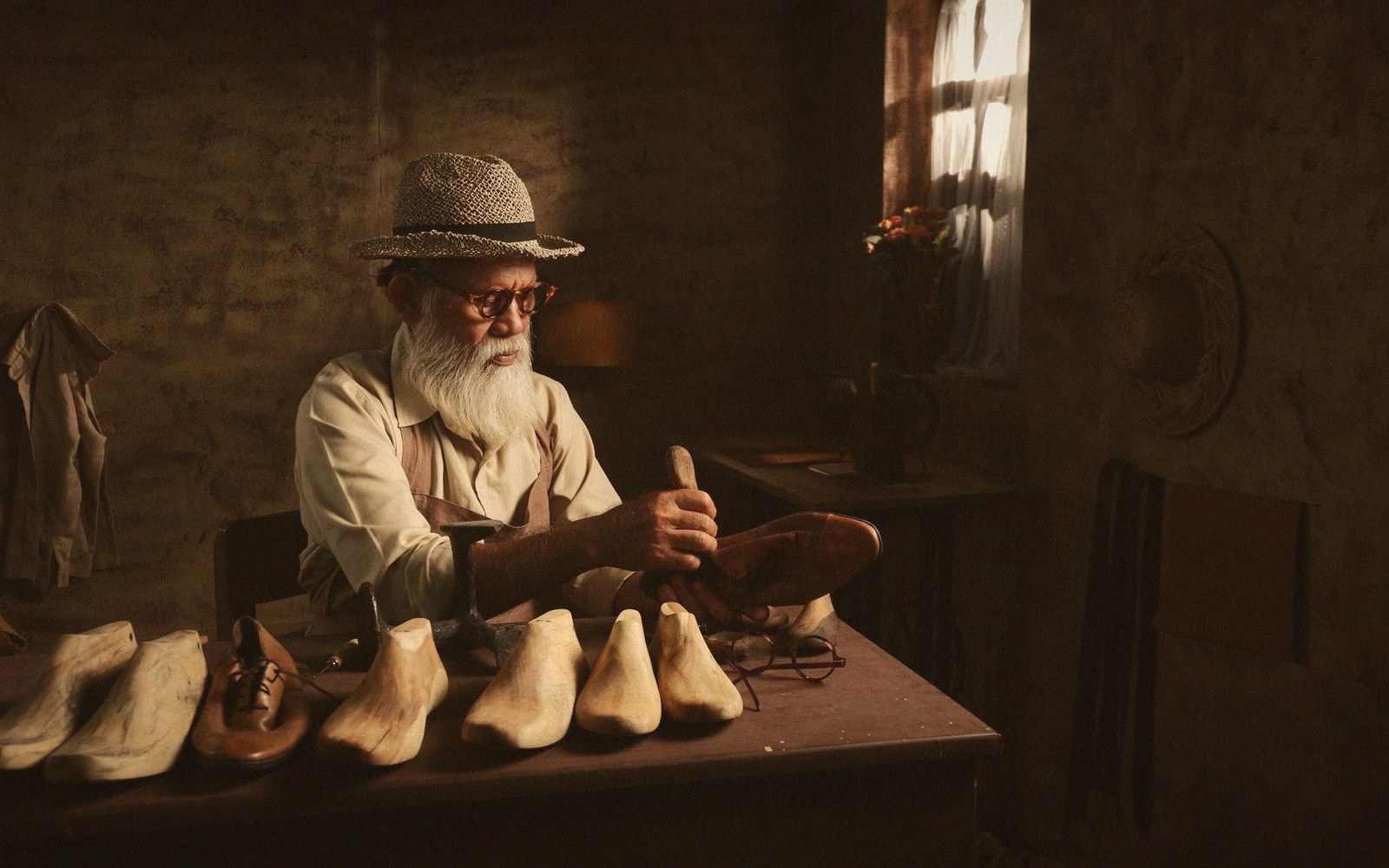
The last is cut before the shoe is. It outlives the pair made on it, and usually the maker.
Photo: Muhammad Rasyad Indra Putra / Pexels
What complicates things further is that tools were almost never labelled at point of manufacture. They were made by smiths and woodworkers for people who already knew what they were. Provenance, when it exists, is typically a donation record — "tools of the late Mr —, joiner" — which names the trade without documenting the practice. Museum staff working today with such an object are often left measuring its wear patterns, photographing the geometry of its edge, and submitting images to specialist networks in the hope that a retired practitioner somewhere will recognise it.
Occasionally one does. Oral identification of this kind is now treated as primary source material by some institutions, recorded and archived alongside the object's registration. The identification of a nineteenth-century plane type from a specialist joiner's shop in southern Germany — identified by a retired craftsman in his eighties who had seen one used as a boy — is the kind of connection that sits, rightly, in an accession file rather than a display caption.
The harder cases are tools that crossed trades, tools that changed function between regions, and tools that were improvised once and then discarded into a donation. For these, the trades that survived offer one anchor: where a craft continues, its tools are still legible. Where it broke, even skilled conservators are reading a dead language, working from the grammar of worn metal and shaped wood, making plausible guesses they note as exactly that — guesses.
The object does not degrade. The context does. And that gap — between a well-preserved tool and a completely lost account of its use — is one of the more unsettling distances in any collection.
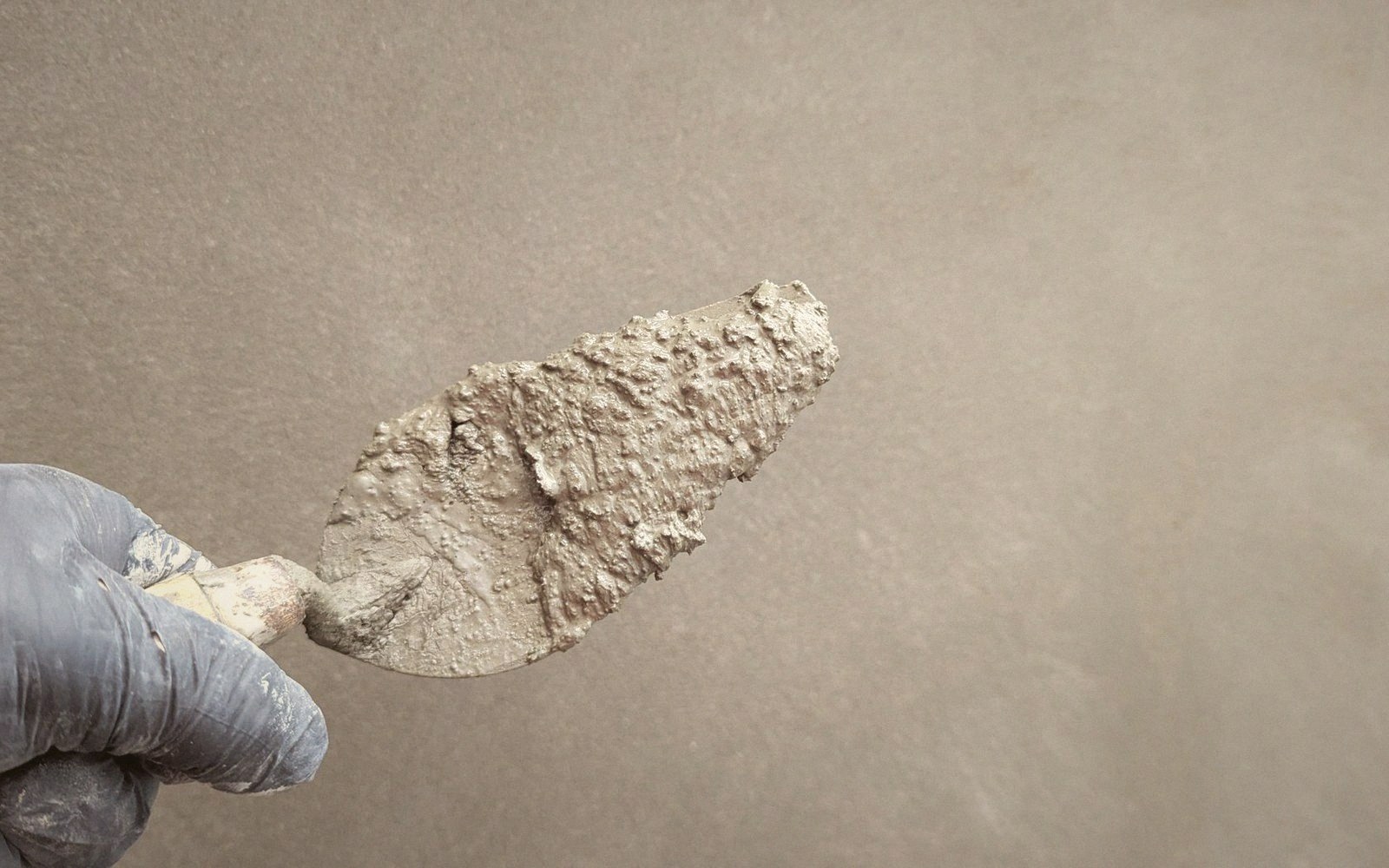
Lime is floated on in thin coats and left to carbonate over months. The slowness is the method, not a defect in it.
Photo: David Antonio Cruz Naira / Pexels
Filed in Hand