Listing and its limits
Protection registers exist nearly everywhere in Europe and mean something different in each.
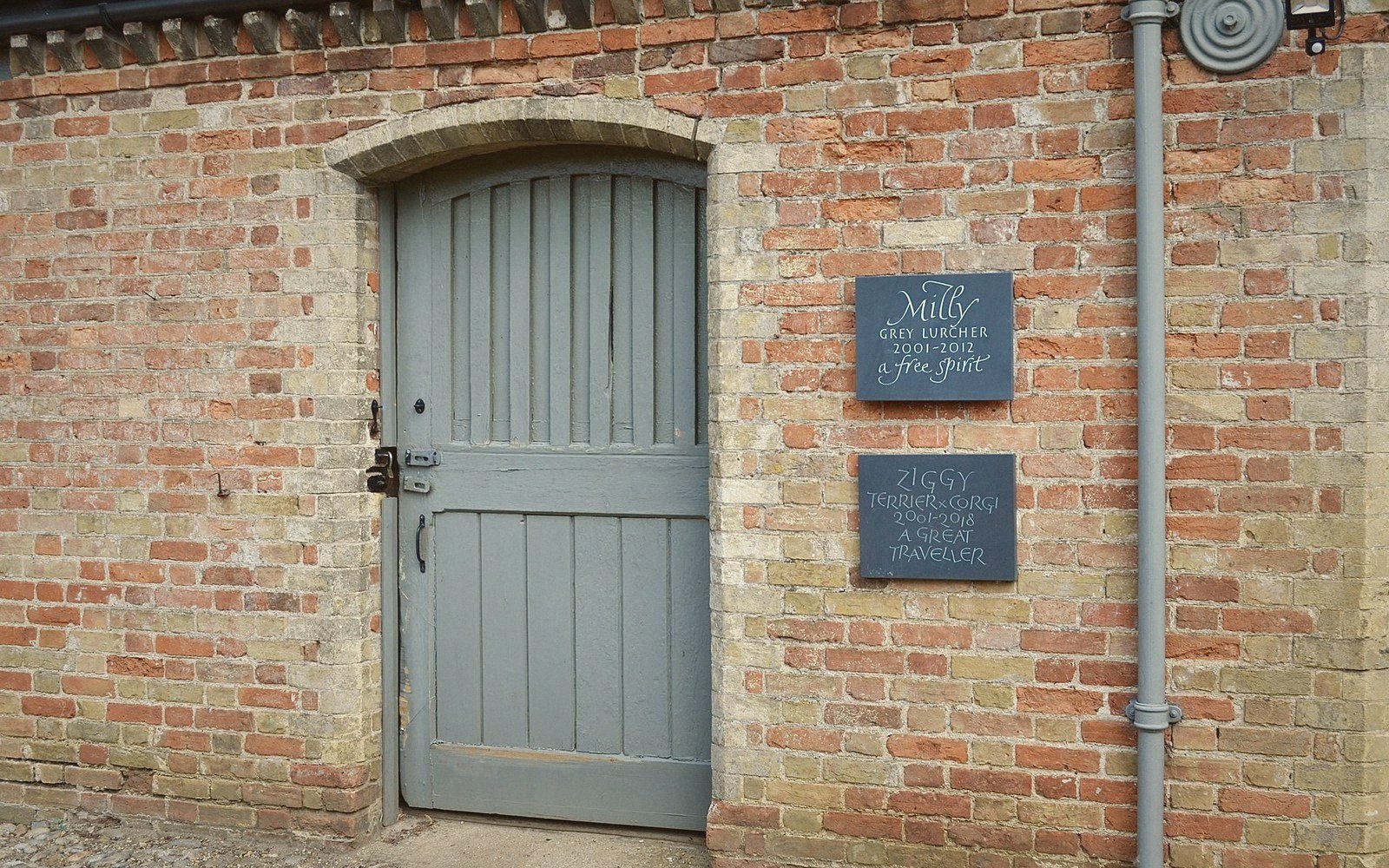
A plaque records that a decision was taken. What the decision obliges an owner to do differs by country.
Photo: Neville Hawkins / Pexels
What a list does — and doesn't
The word "listed" has become shorthand for protected, but it is much softer than that. What a protection register actually does is require a conversation before a change is made. It does not freeze a building, prevent deterioration, guarantee funding or compel repair. In many jurisdictions it does not even prevent demolition — it slows demolition, sometimes enough to stop it, sometimes not.
Every European country runs some version of the system, and the divergence between them is wider than most people assume. France's monuments historiques register, one of the oldest statutory lists in the world, operates at two tiers: a full classification and a looser inscription. Both impose consent requirements for alteration, but neither automatically releases money. England's listed building system runs three grades (I, II* and II), with the upper tier covering roughly two percent of all listed structures; even a Grade I designation carries no maintenance obligation on the owner. Germany devolves the matter to the sixteen Länder, so thresholds, procedures and enforcement vary from Bavaria to Bremen. Italy protects through the vincolo (a binding constraint) applied under the Codice dei beni culturali e del paesaggio, a legal instrument considerably stronger in theory than it often proves in practice.
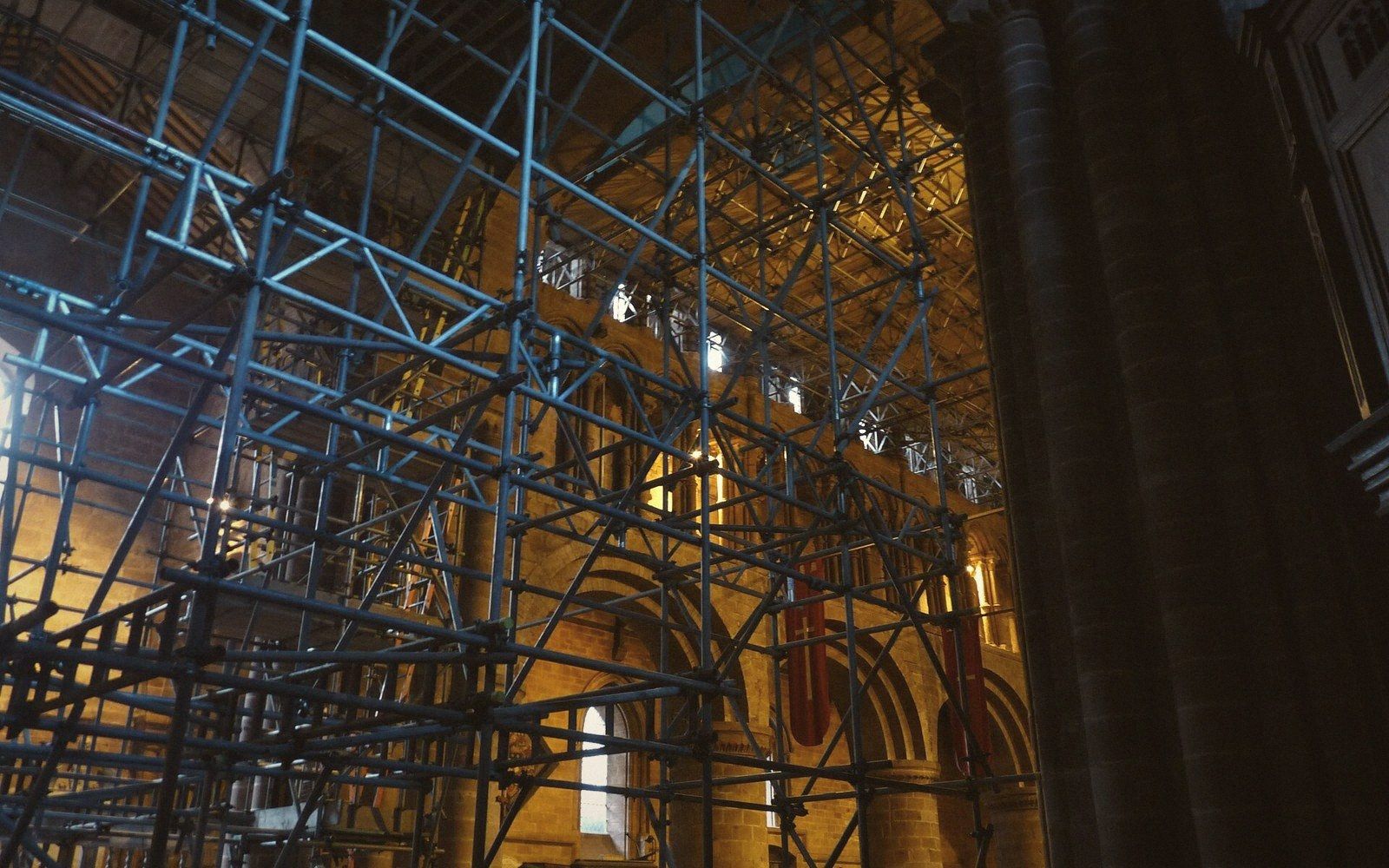
Scaffolding is designed to stand free of the fabric. Nothing structural may lean on the building being repaired.
Photo: St John the Baptist Parish Church, Chester - crossing and east end of nave with scaffolding from north · Wikimedia Commons
The age threshold shifts too. England lists buildings from 1840 onwards with increasing selectivity; post-1945 buildings require a particular case for significance. France will protect a building of any date if it meets the test. The Netherlands operates a register that has at times included structures barely thirty years old. In each country, the list reflects not only what survives but what a given political culture decided was worth the administrative friction of protecting.
What all these systems share is a fundamental limit: listing responds to threats rather than anticipating them. A building enters a register after someone notices it is at risk, or after a campaign, or sometimes after a loss prompts legislation to prevent the next one. The paperwork follows the care, not the other way around. Where conservation is maintenance — routine, budgeted, built into ownership — listing matters less than it does where maintenance is an afterthought and the register is the last line of defence.
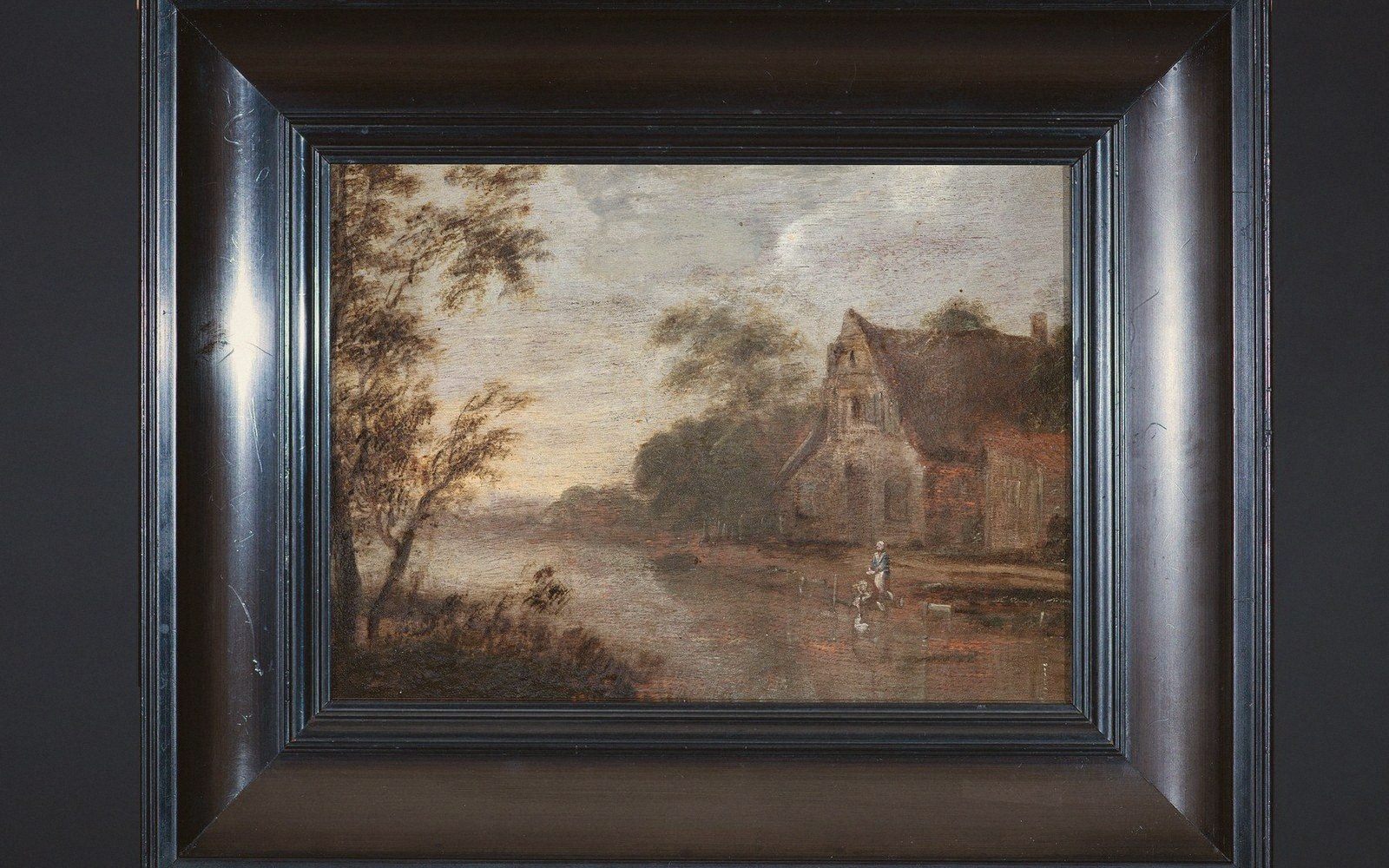
Raking light is the first examination made on any panel: it turns a flat surface into a topography of lifting, cupping and old fills.
Photo: Jan van Goyen – Country House by the Water – c. 1640–1650 – Oil on oak panel – Beatriz de Luna Art Collection · Wikimedia Commons
The more honest question a protection register asks is not whether a place is significant but whether the institutions around it are strong enough to act when the designation is tested. The list is only as durable as the will behind it.
Filed in Divergence