Restore or arrest
Two answers to the same question
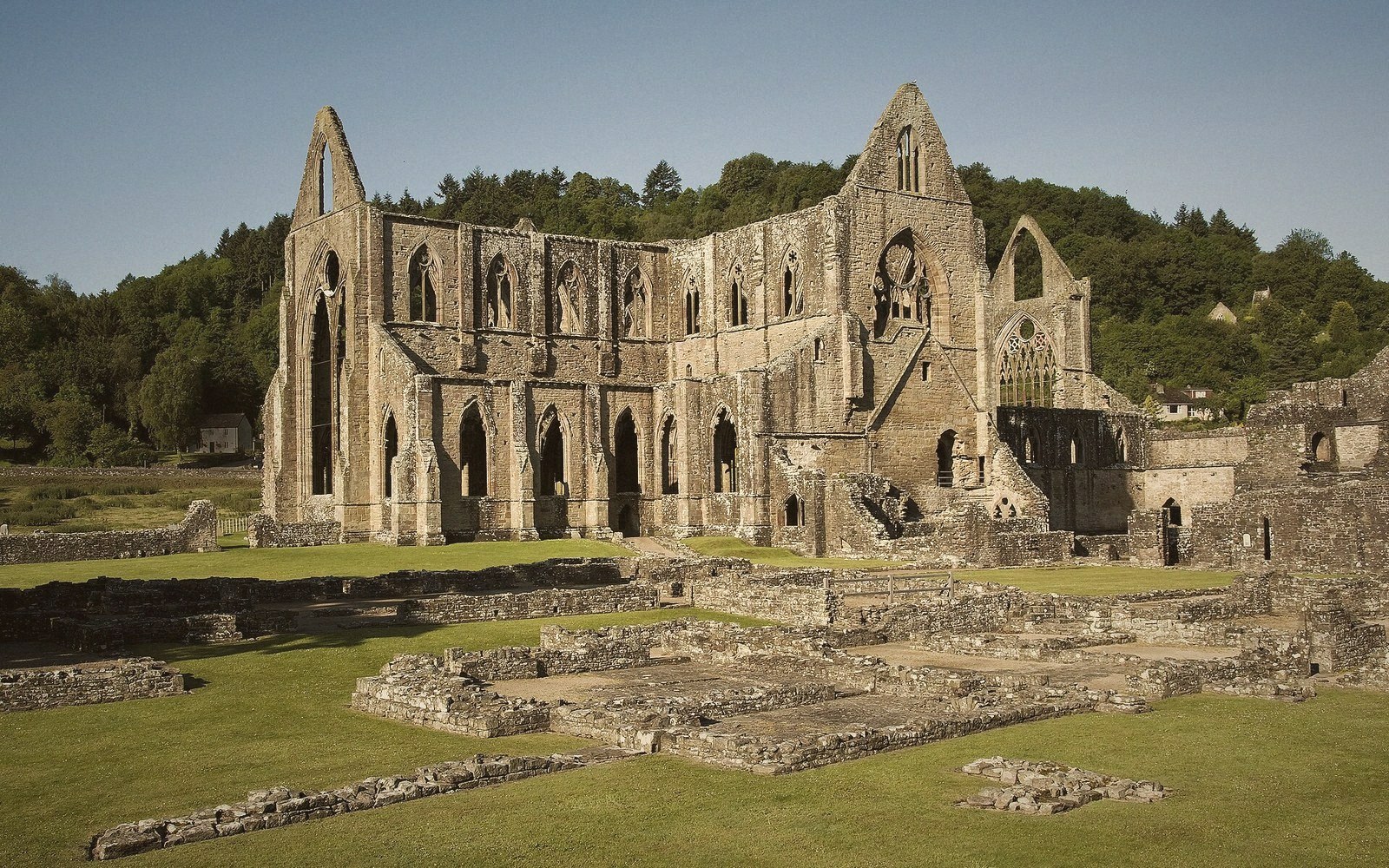
Stabilised and left as a ruin: one tradition’s finished job is another’s abandonment.
Photo: Tintern Abbey and Courtyard · Wikimedia Commons
When a medieval tower loses its roof and the upper courses begin to collapse, a decision has to be made — but different traditions make it differently. France rebuilds the roof. England shores up the walls and leaves the sky showing. Both moves are called conservation. They produce entirely different landscapes.
The restoring tradition runs deepest where the nineteenth century set its terms most firmly. Eugène Viollet-le-Duc, working in France from the 1840s, argued that a monument should be returned to a complete state it may never have actually held at any one moment — drawing on comparative evidence, structural logic and reasoned inference. Carcassonne, Pierrefonds, the west front of Notre-Dame de Paris: all bear his thinking. The result is legible as architecture, sometimes superb as architecture, and controversial ever since as history. Critics note that the conjectural elements are invisible; a visitor cannot tell restored stone from original.
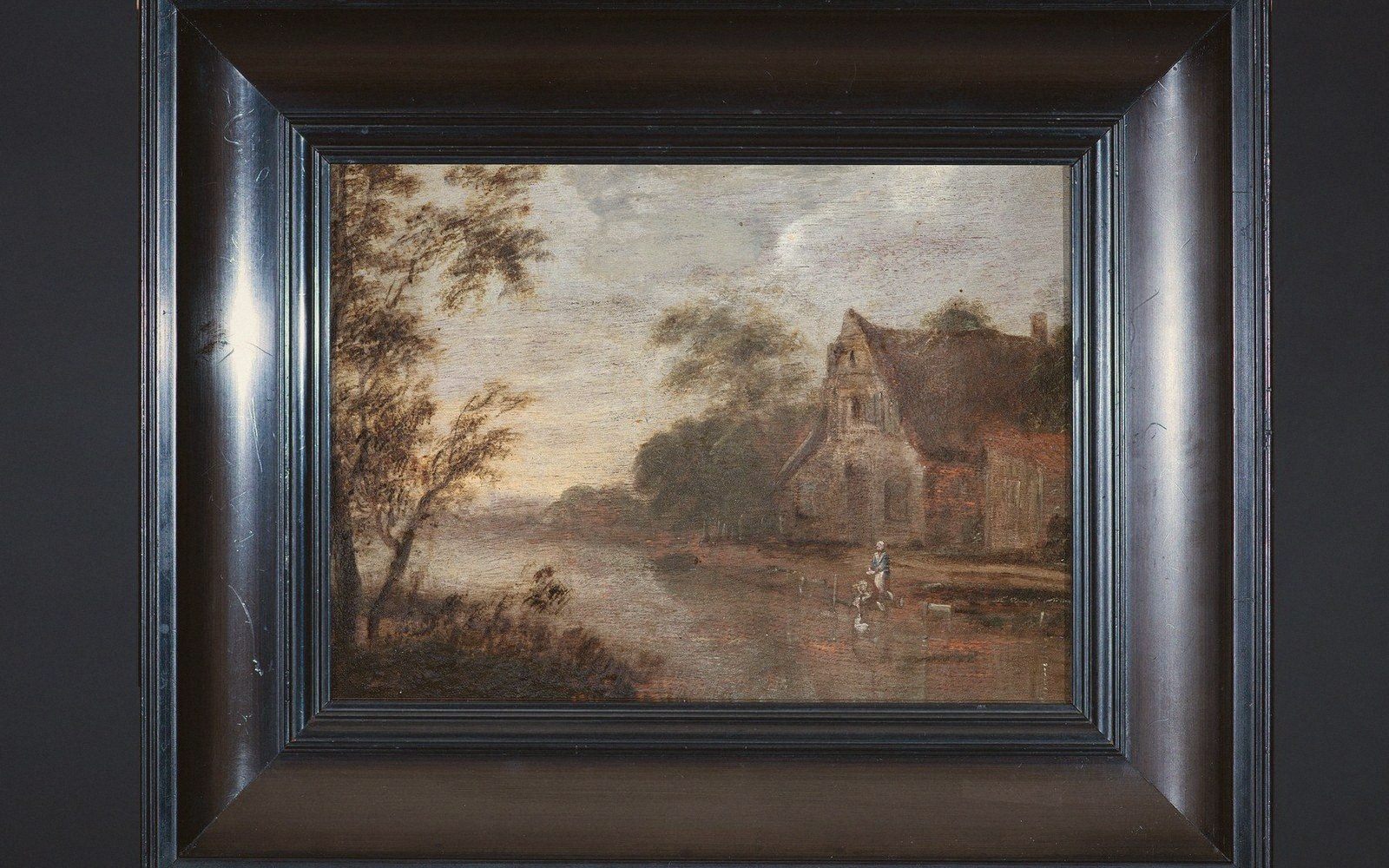
Raking light is the first examination made on any panel: it turns a flat surface into a topography of lifting, cupping and old fills.
Photo: Jan van Goyen – Country House by the Water – c. 1640–1650 – Oil on oak panel – Beatriz de Luna Art Collection · Wikimedia Commons
The arresting tradition holds that the ruin is itself the authentic object. What survives is evidence; what is added is interpretation, and interpretation should not be indistinguishable from fact. English practice from John Ruskin onward argued for exactly this: repair the damage, keep out the weather, do as little as will suffice. Tintern, Fountains, Rievaulx — roofless, mossy, complete as ruins — are the monuments this philosophy produces. The aesthetic consequence became so loved that it now looks like inevitability, but it was a choice, not a law of nature.
Neither tradition is static. France has moved toward lighter intervention on some sites; English Heritage and its successor bodies have rebuilt roofs, floors and staircases where the evidence was secure and the alternative was further loss. Germany, after 1945, developed its own third course: rebuilding from rubble where a civic identity depended on it, Dresden's Frauenkirche being the extreme example — complete by 2005, using salvaged stone set against matching new material, every original fragment mapped and replaced where possible.
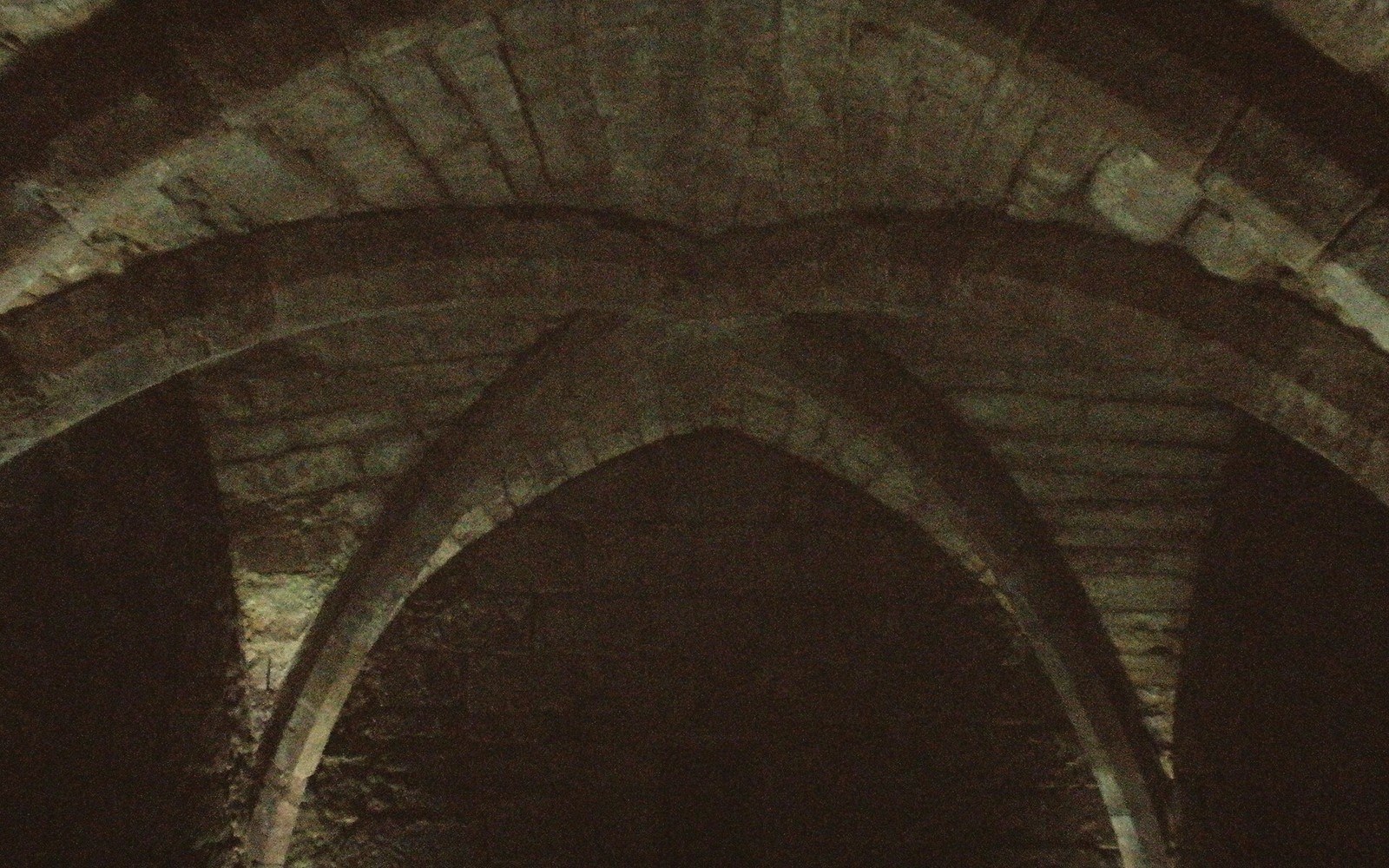
The vault is often the oldest surviving room in a building: it was built to carry weight, so nobody ever needed to alter it.
Photo: Medieval Cellar beneath 38-39, Bayley Lane. Coventry. Vaulted ceiling looking South. · Wikimedia Commons
What separates these outcomes is not competence or budget but a prior philosophical commitment: whether the monument's value lies in its material continuity, or in the spatial and cultural experience it transmits. The commitment tends to be national, almost temperamental, and rarely made explicit. It simply expresses itself in what each country's ruins look like.
Filed in Divergence