Who owns a monument
State, church, commune, trust or private family — the answer differs by country and decides everything about what may be done to a building.
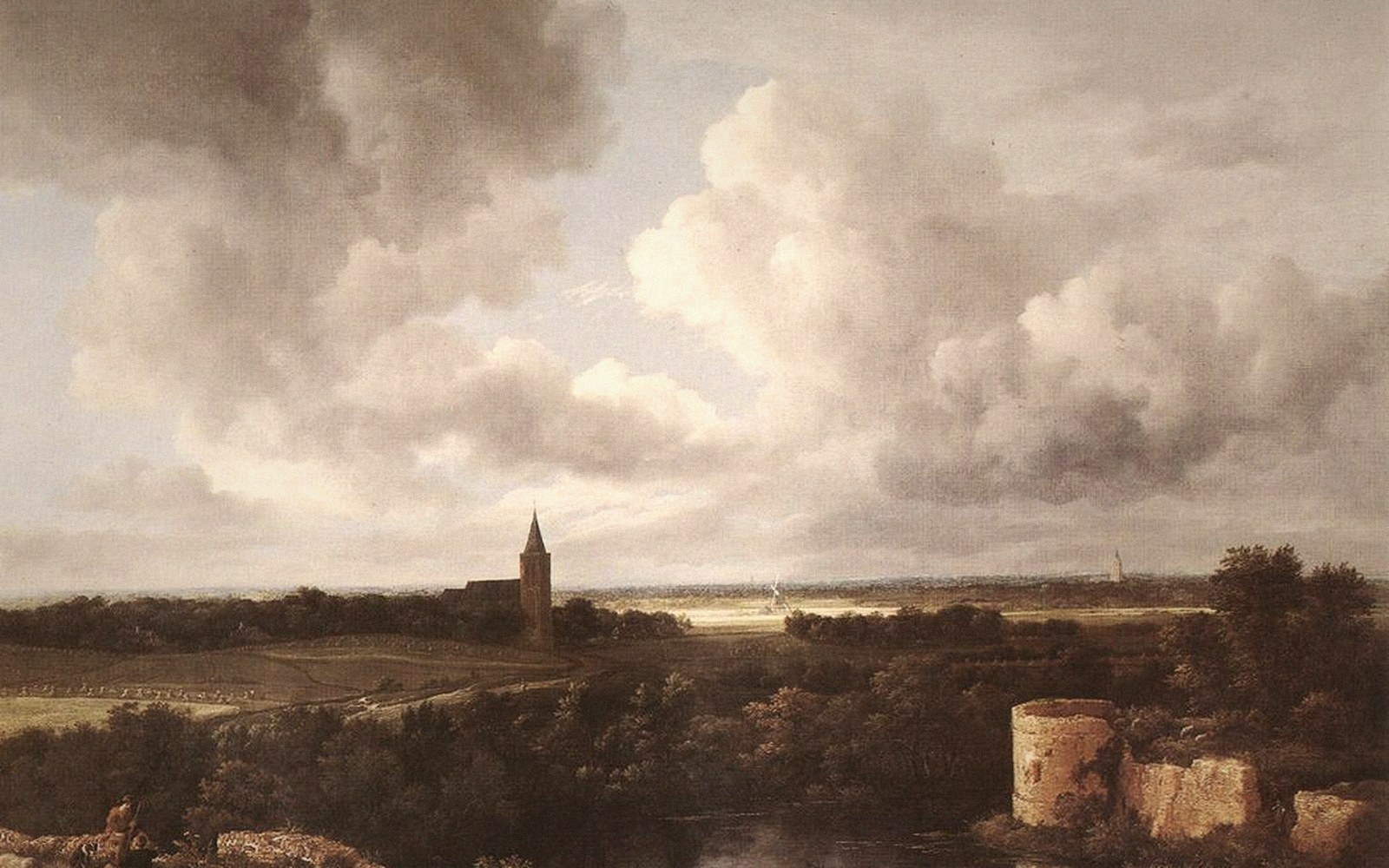
Ownership decides what may be done to a building long before any register does.
Photo: Jacob Isaacksz. van Ruisdael - An Extensive Landscape with a Ruined Castle and a Village Church - WGA20493 · Wikimedia Commons
The question that precedes all others
Before a conservator lifts a tool, before a planner grants permission, before a single stone is touched, ownership determines the frame. In theory, listing — inclusion on a national or regional protection register — imposes the same rules on every owner equally. In practice, who holds the title shapes how those rules land, who pays for compliance, and who has standing to resist.
France centralised its answer early. The monuments historiques system, consolidated in the nineteenth century, sorts protected buildings into two tiers: classified (classés) and listed (inscrits). The state can in principle compel a private owner to allow works, and the Centre des monuments nationaux manages a large portfolio on behalf of the French government. The owner — private, communal or ecclesiastical — retains the deed but cedes a degree of operational control the moment the building is classified. Grant funding flows through the Directions régionales des affaires culturelles, the regional arms of the Culture Ministry, and with that money comes supervision. An owner who cannot afford maintenance can, under certain conditions, be required to transfer the property.
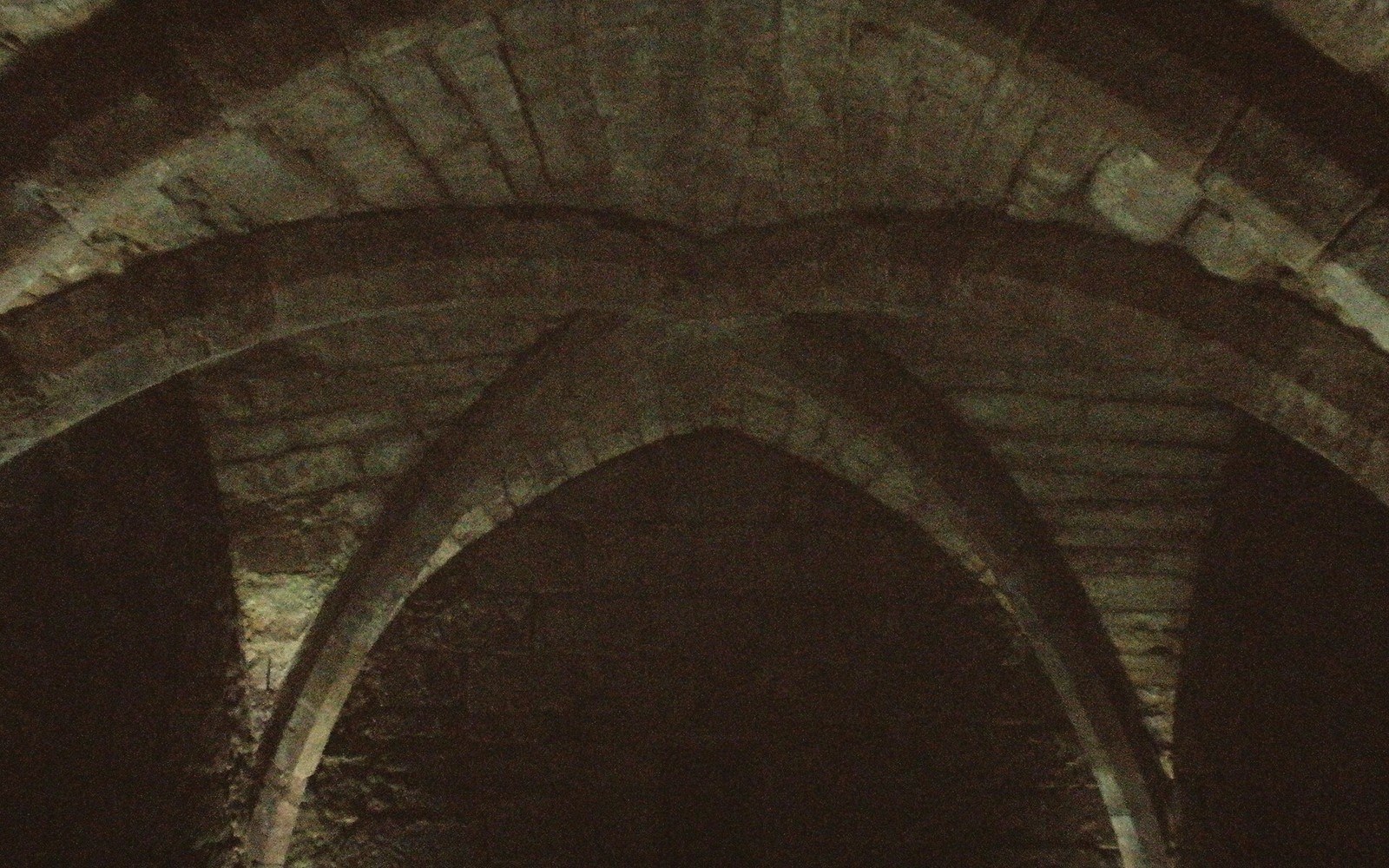
The vault is often the oldest surviving room in a building: it was built to carry weight, so nobody ever needed to alter it.
Photo: Medieval Cellar beneath 38-39, Bayley Lane. Coventry. Vaulted ceiling looking South. · Wikimedia Commons
Germany disperses the same problem across sixteen Länder. There is no single national monuments law; each state has its own. A Baroque palace in Bavaria answers to Bavarian rules administered by the Bayerisches Landesamt für Denkmalpflege; the same building three hundred kilometres north would answer to a different body with a different philosophy. What counts as acceptable repair, what proportion of costs the public purse covers, even what triggers the protection in the first place — none of it is uniform.
Church, commune, trust, family
Ecclesiastical ownership presents a particular complication across the continent. Church buildings are often among the oldest and most technically demanding in a country, but the church as an institution may have neither the resources nor the specialist knowledge to maintain them. In England, the Church of England owns around twelve thousand listed buildings — roughly forty-five percent of all Grade I listings. The state does not fund their upkeep directly; instead a patchwork of grant bodies, most notably Historic England and the National Lottery Heritage Fund, channels money toward them. The church retains ownership and a degree of exemption from the normal listed building consent regime, operating through its own internal faculty jurisdiction. Critics argue this leaves significant heritage outside routine public oversight; defenders point to a long record of professional care and argue the system is faster and less adversarial than full planning control.
Communal ownership — the comune in Italy, the commune in France, the parish or district council in Britain — tends to produce the most variable outcomes. A well-resourced city council can be an exemplary custodian. A small rural commune with a decaying Romanesque church and no technical staff can be a slow catastrophe. Italy's Soprintendenze, the regional heritage offices, nominally supervise both, but their capacity to monitor tens of thousands of individually protected structures across diverse ownership types has never matched their mandate.
The private family landowner is perhaps the most discussed and least typical case. In Britain, country houses held by hereditary families attract disproportionate attention. Some are sustained through a combination of tax relief, public opening and institutional partnership with bodies such as the National Trust. Others deteriorate quietly because the family cannot sell — listing restricts alteration without consent — yet cannot afford what the listing implicitly demands. The question of listing and its limits is sharpest here: protection intended to preserve a building can, without financial instruments to match it, trap an owner in a position where neither action nor inaction is possible.
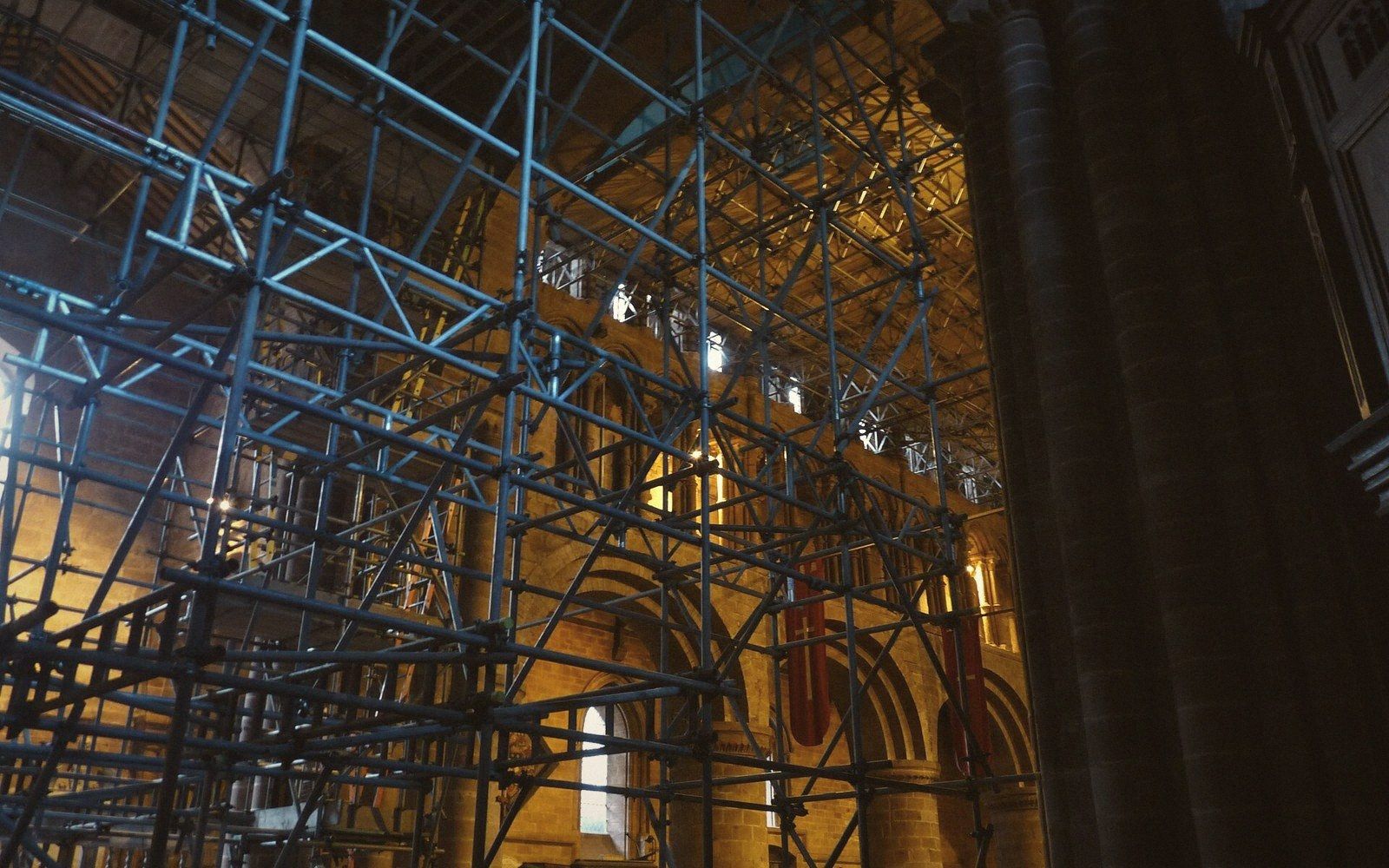
Scaffolding is designed to stand free of the fabric. Nothing structural may lean on the building being repaired.
Photo: St John the Baptist Parish Church, Chester - crossing and east end of nave with scaffolding from north · Wikimedia Commons
What ownership actually decides
The divergence matters most when something goes wrong — a roof fails, a wall cracks, a fire takes a wing. A state body has access to emergency public funds and in-house expertise. A private owner faces personal liability, insurance wrangles and the need to instruct and pay specialists while seeking consent from the same authority assessing the damage. The speed and quality of first response differ accordingly.
No tenure type is inherently better for a building. State ownership can produce neglected buffer stocks of unreformed properties. Private ownership can produce immaculately maintained houses whose owners happen to care. What matters is whether the legal framework matches the financial reality and whether whoever holds the title also has — or can draw on — the knowledge to use it well.
Filed in Divergence