The treasury
Church silver, reliquary caskets and enamel work grouped by material as much as meaning — and what that says about how collections formed.
What a treasury actually is
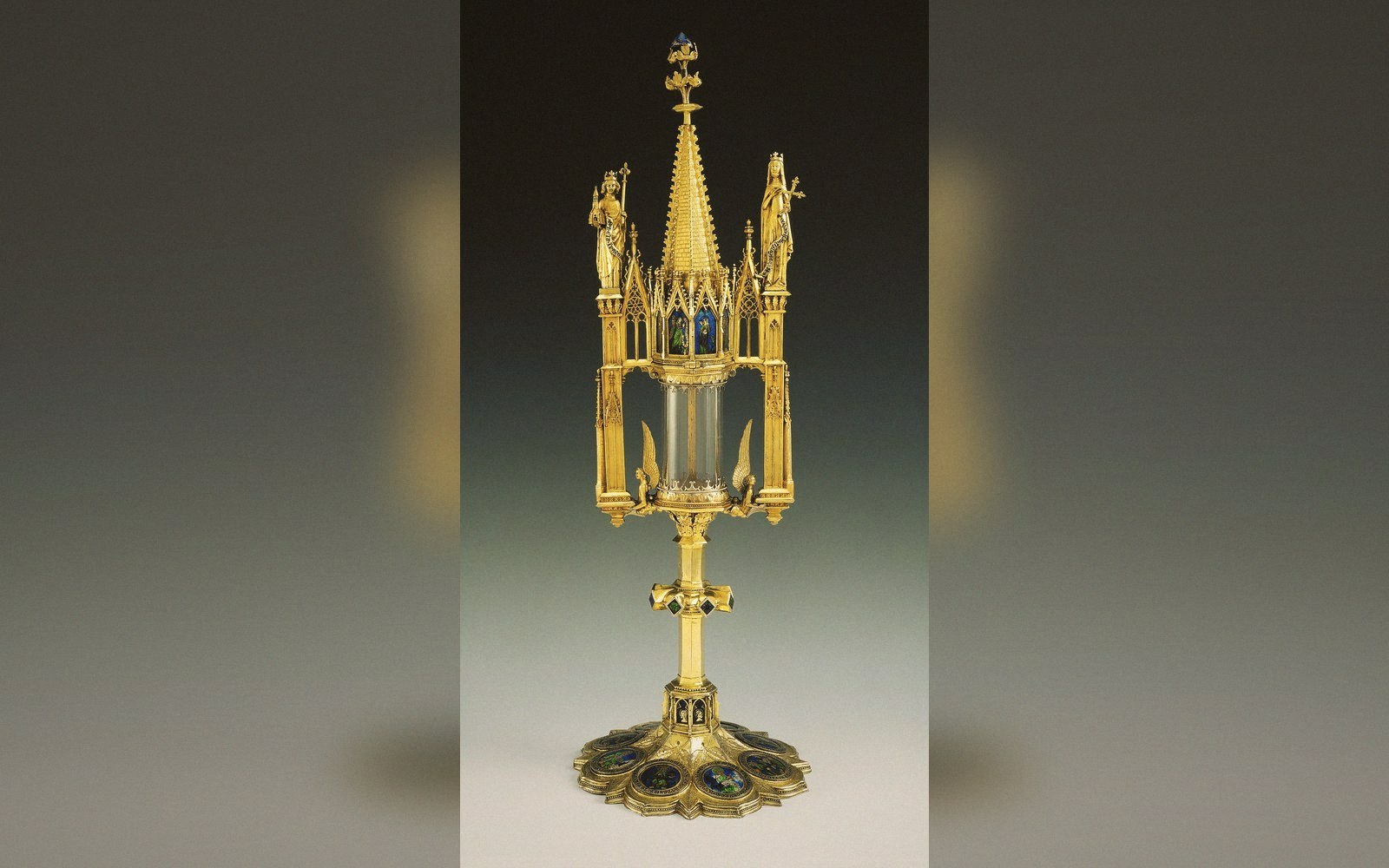
The treasury — trésor in French, Schatzkammer in German — is not a category invented by museums. It was a room, usually off a sacristy or beneath a choir, where a church kept the objects it could not afford to lose: reliquaries in silver and gilt copper, monstrances, chalices, processional crosses, altar plate. The grouping was practical before it was curatorial. These things lived together because they were made of precious metal and required the same security, the same locked door, the same trusted keeper.
What survives in cathedral treasuries today tends to be whatever escaped the waves of dispersal — the French Revolutionary confiscations, the Reformation, the Napoleonic sequestrations, the quieter losses of the nineteenth century when debt sold off what ideology had spared. The treasuries at Aachen, Conques, Sens and Liège are among the most intact in Europe, each reflecting a slightly different history of what got out and what stayed.
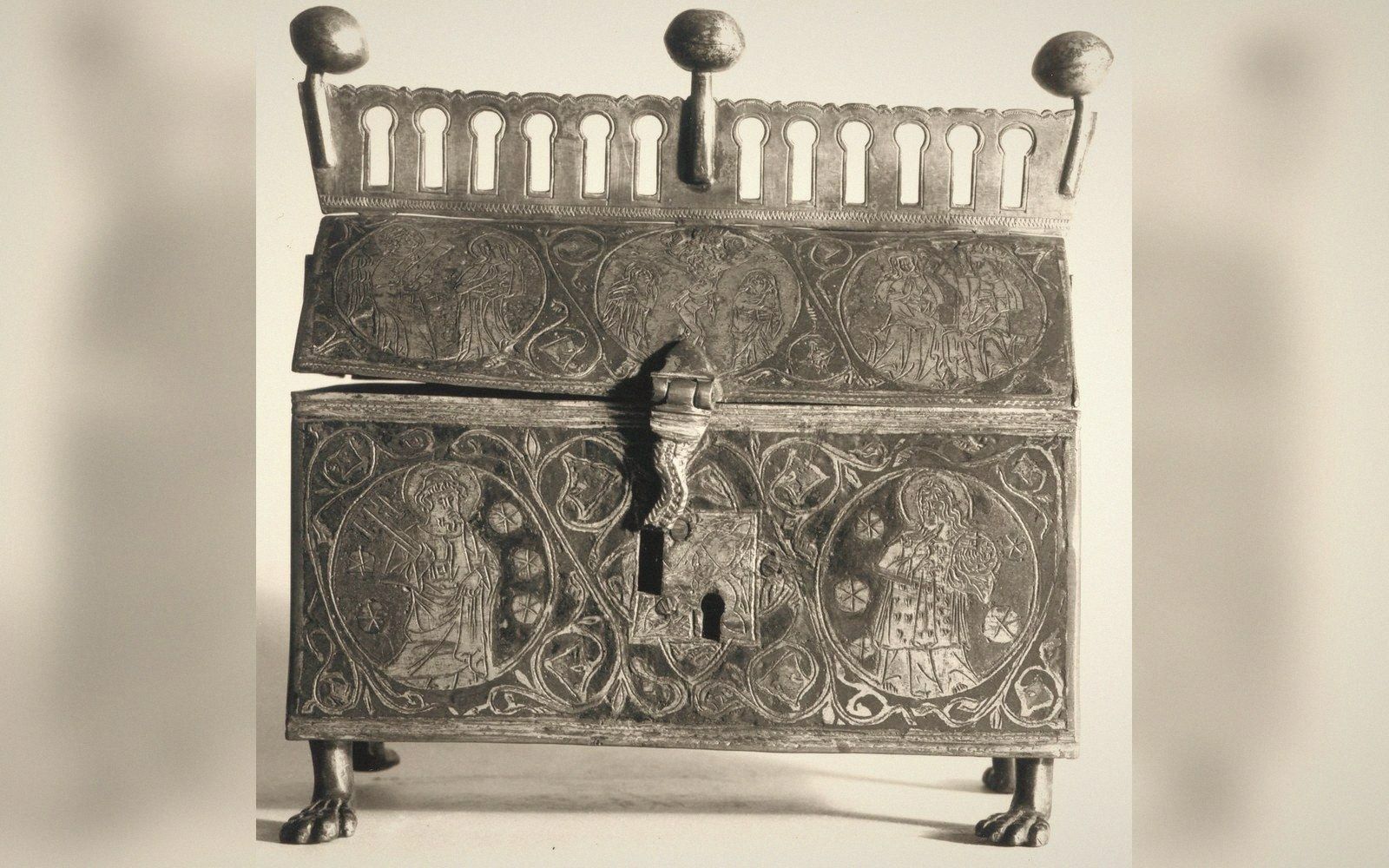
A treasury groups by material rather than subject, which is how a casket and a chalice end up in the same case.
Photo: Reliquary box · Wikimedia Commons
Metal and enamel as the common thread
The objects share a material logic. Cloisonné and champlevé enamel — techniques in which coloured glass is fired into metal cells or incised channels — appear on reliquary caskets from the Mosan workshops of the twelfth century alongside later Gothic silver that was worked by entirely different hands. A visitor unfamiliar with liturgical use might read these as a coherent decorative tradition; in fact they were made across centuries, the enamel work often Flemish or Rhenish, the later plate Parisian or Iberian. Proximity in a treasury case can compress that distance misleadingly.
Reliquaries present a particular problem for conventional art history, because the object that matters most is the one inside: a fragment of bone or cloth whose authentication, chain of custody and theological weight sit quite separately from the quality of the setting. The setting, however, is what conservation addresses. The relic is not the conservator's subject.
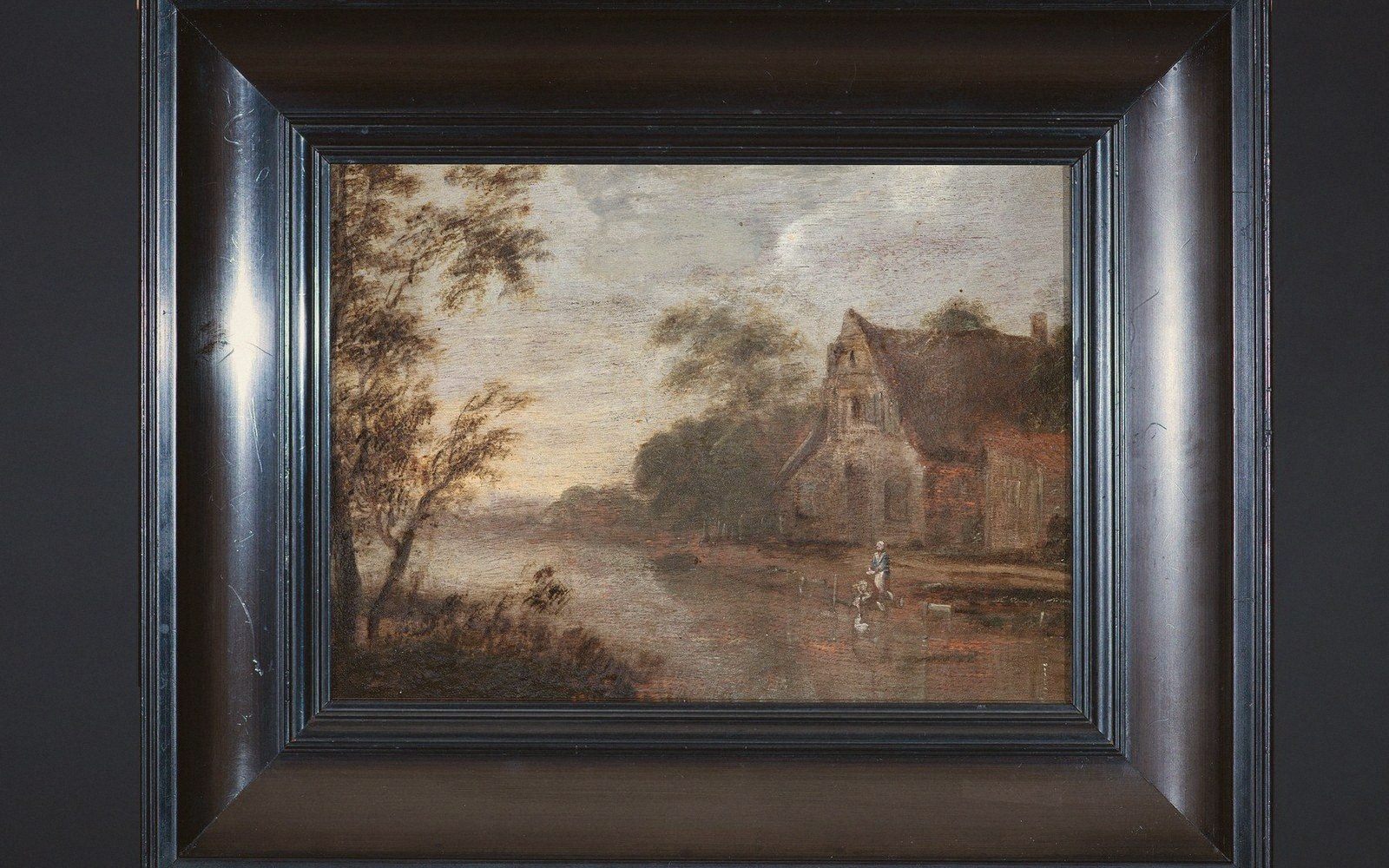
Raking light is the first examination made on any panel: it turns a flat surface into a topography of lifting, cupping and old fills.
Photo: Jan van Goyen – Country House by the Water – c. 1640–1650 – Oil on oak panel – Beatriz de Luna Art Collection · Wikimedia Commons
What the grouping hides
Bringing these objects into a museum treasury — whether the Louvre's salle des objets d'art or the Kunsthistorisches Museum's Weltliche Schatzkammer — reframes them around material and formal quality. An object that was once in working liturgical use becomes, in display terms, a showcase piece. An altar frontal stripped of its original setting loses the architectural relationship that gave it scale. The treasury as museum category is real and useful; it is also, always, a simplification of what the objects once were for.
Filed in Collections