The calendar
Heritage fixed to a date survives as long as the date carries weight. When the date empties, the custom either transforms or disappears.
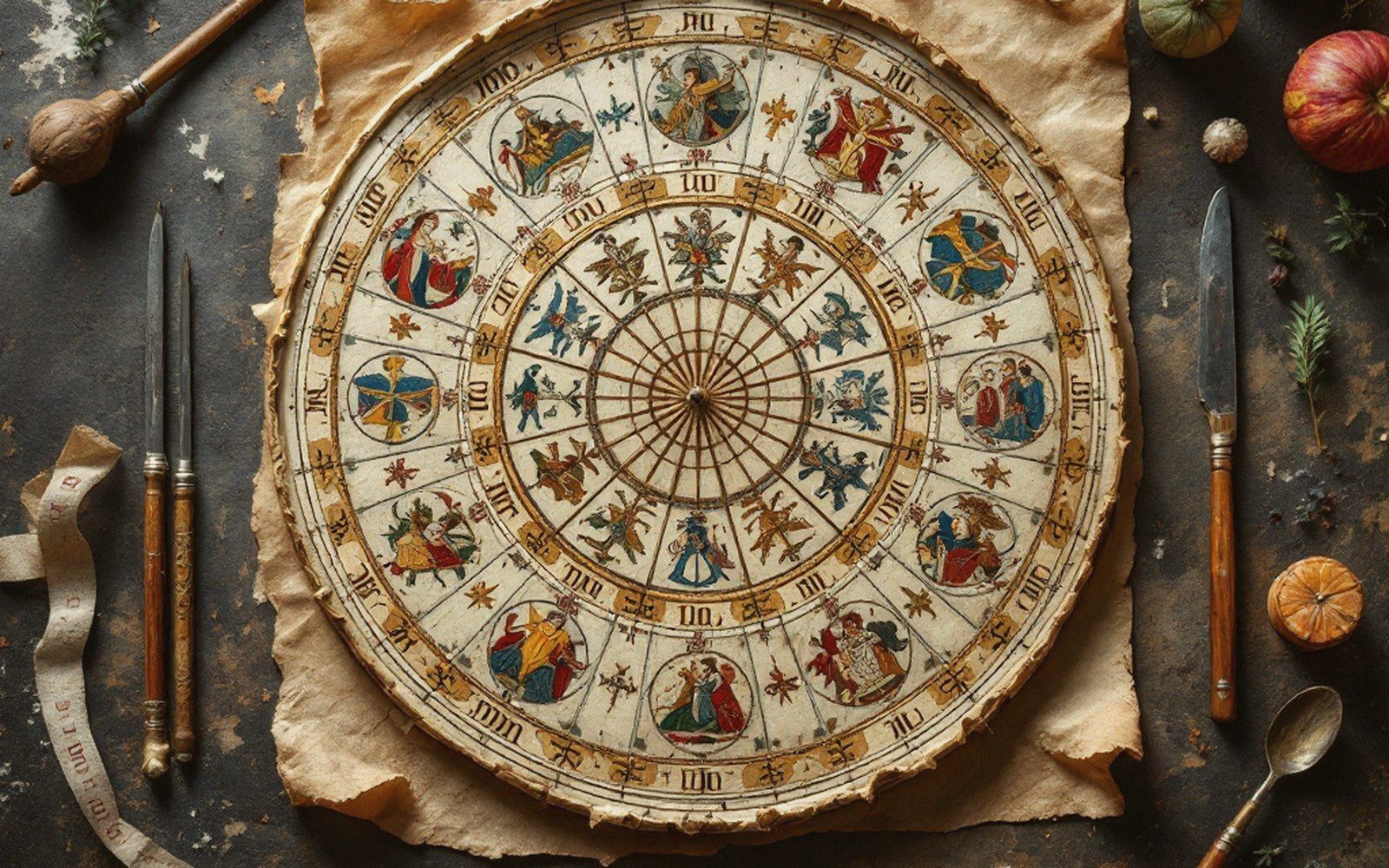
Fix a custom to a date and it survives as long as the date carries weight.
Why the date holds everything together
A procession on the feast of Corpus Christi, a bonfire on midsummer eve, a market on the day of a patron saint — these customs are inseparable from when they happen. The calendar is not a container for the practice; it is structural to it. Move the date and you have already changed the thing.
Most of Europe's surviving observances are anchored to the liturgical year, the agricultural cycle, or both at once. The two systems overlaid each other across centuries until the saint's day and the harvest, the fast and the fallow, were effectively the same event understood twice. What we call intangible heritage is, in most cases, a date with accumulated behaviour attached.

The vault is often the oldest surviving room in a building: it was built to carry weight, so nobody ever needed to alter it.
Photo: Medieval Cellar beneath 38-39, Bayley Lane. Coventry. Vaulted ceiling looking South. · Wikimedia Commons
The problem appears when the anchor loosens. This happens in several ways. Industrialisation broke the agricultural calendar's authority — a feast marking the end of the grain harvest means something different when nobody in the town harvests grain. Secularisation weakened the liturgical one. What remained was often the behaviour itself, detached and retrospectively labelled a tradition, performed now on the nearest Saturday to the original date because attendance is better at weekends and the butcher's shop is no longer closed on holy days.
The nearest Saturday is not a small change. It severs the practice from its logic and reconnects it to convenience, which is a different thing. The bonfire still burns and the costumes are still worn, but the link between fire and solstice, or between fasting and resurrection, or between walking the boundary and the legal standing of the boundary, has been replaced by the pleasant fact that people enjoy it. Enjoyment is real, but it is not the same as observance.
Where the date has retained meaning — or been given new meaning — the practice holds its shape more reliably. The calendar of the Eastern Orthodox churches, still governing daily life in parts of Greece, Romania and Serbia, keeps feasts on their own day with real consequences: specific foods, abstentions, visits, particular objects handled in particular ways. The practice remains integrated with time rather than scheduled around it.
What the procession itself carries — the route, the objects, the order of who walks where — can be documented. The date is harder to preserve because it cannot be curated; it is either still weighted by belief and custom, or it is not. When a community shifts an observance to a convenient weekend, the documentation bodies record the new arrangement as the tradition. Sometimes that is all that is left to record.
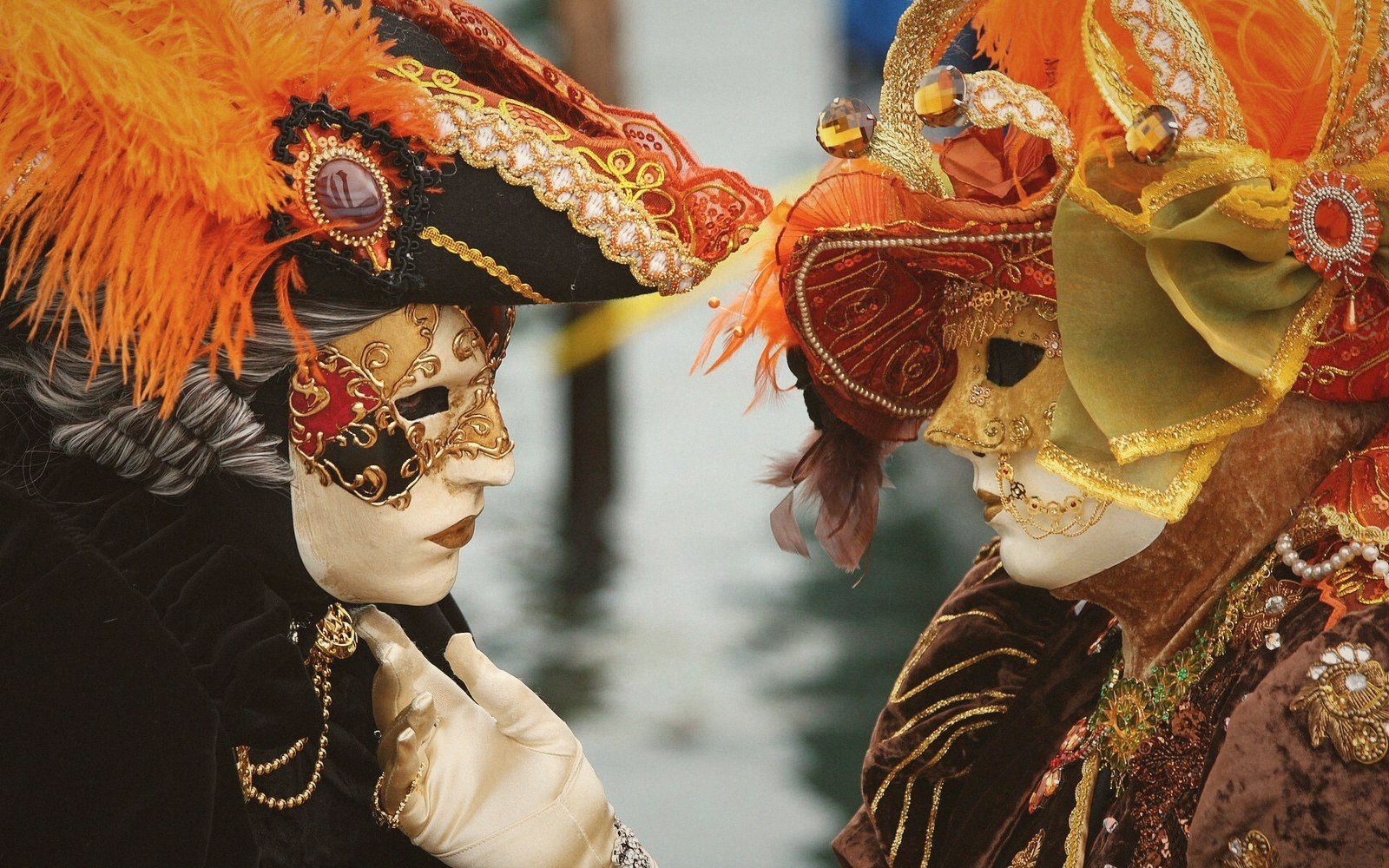
Photographed away from the crowd against a plain wall, the costume reads as an object again.
Photo: Venice Carnival - Masked Lovers (2010) · Wikimedia Commons
Filed in Observance