Costume as archive
Garments remade to the same pattern for generations carry technical and social knowledge that no written record holds.
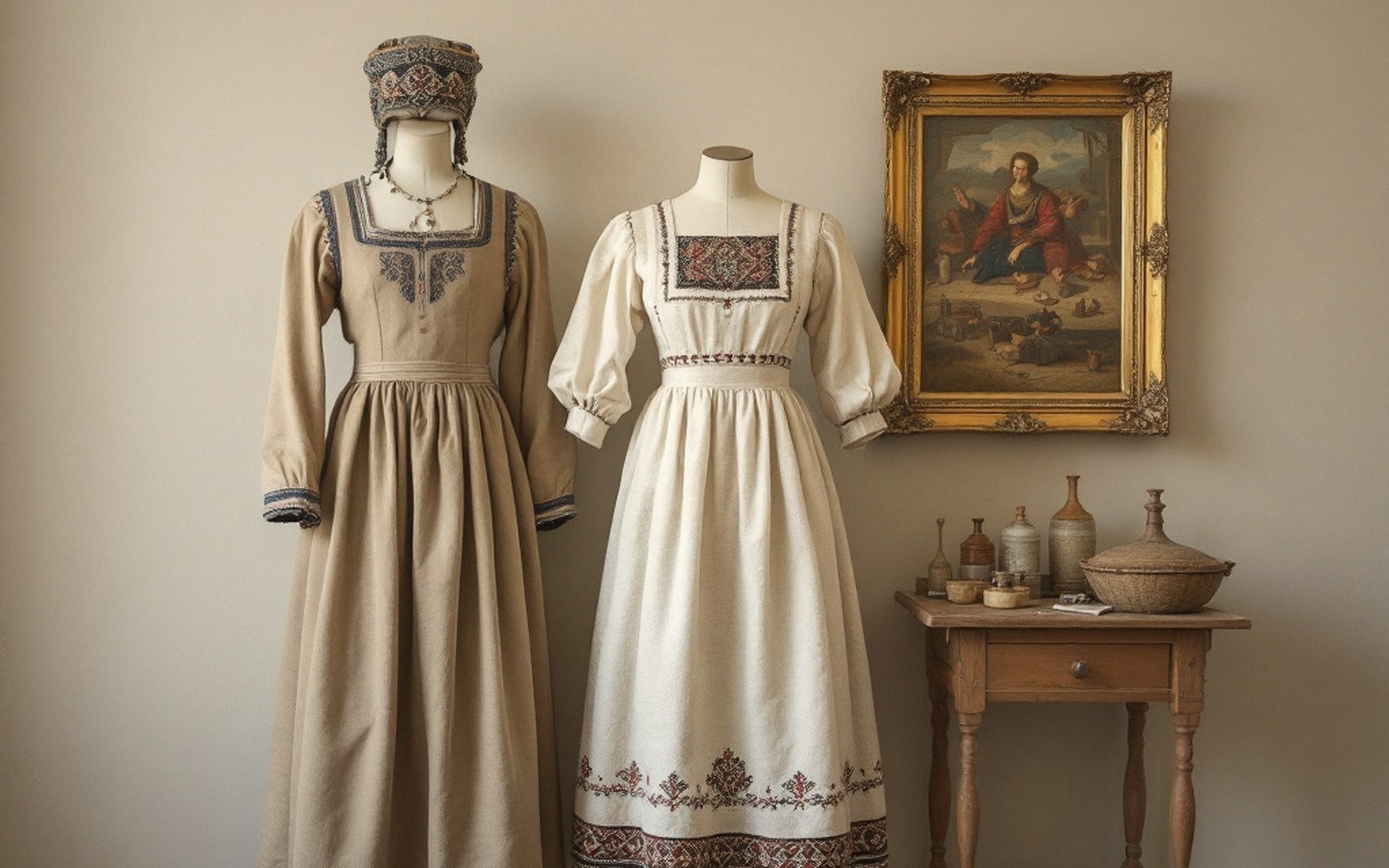
Remade to the same cut for generations, a garment carries construction knowledge that no written record holds.
The pattern as document
A festival costume remade every generation to the same cut, the same stitch count, the same sequence of fastenings is doing something a photograph cannot: it is transmitting a set of decisions through the hands that execute them. The weaver who reproduces a border knows which threads cross which, at what tension, in what order. The embroiderer working from a shared template learns a pressure and an angle that cannot be written down. The garment accumulates this knowledge the way a building accumulates its repairs — invisibly, until someone breaks the chain and discovers how much was being held.
Across Europe, civic and religious observances that require specific dress have sustained textile traditions long after those traditions left commercial production. The tracht — the regional dress of German-speaking Central Europe — is one of the more documented cases, but the dynamic recurs wherever a dated ceremony demands period-accurate dress: the embroidered linen of Breton pardons, the woven sashes of Basque festival processions, the silk brocades remade for certain Venetian civic occasions. In each case the costume is neither museum piece nor fancy dress. It is a working object that must perform on the body under physical strain, which is precisely why its making cannot be delegated to a cut-and-sew approximation.
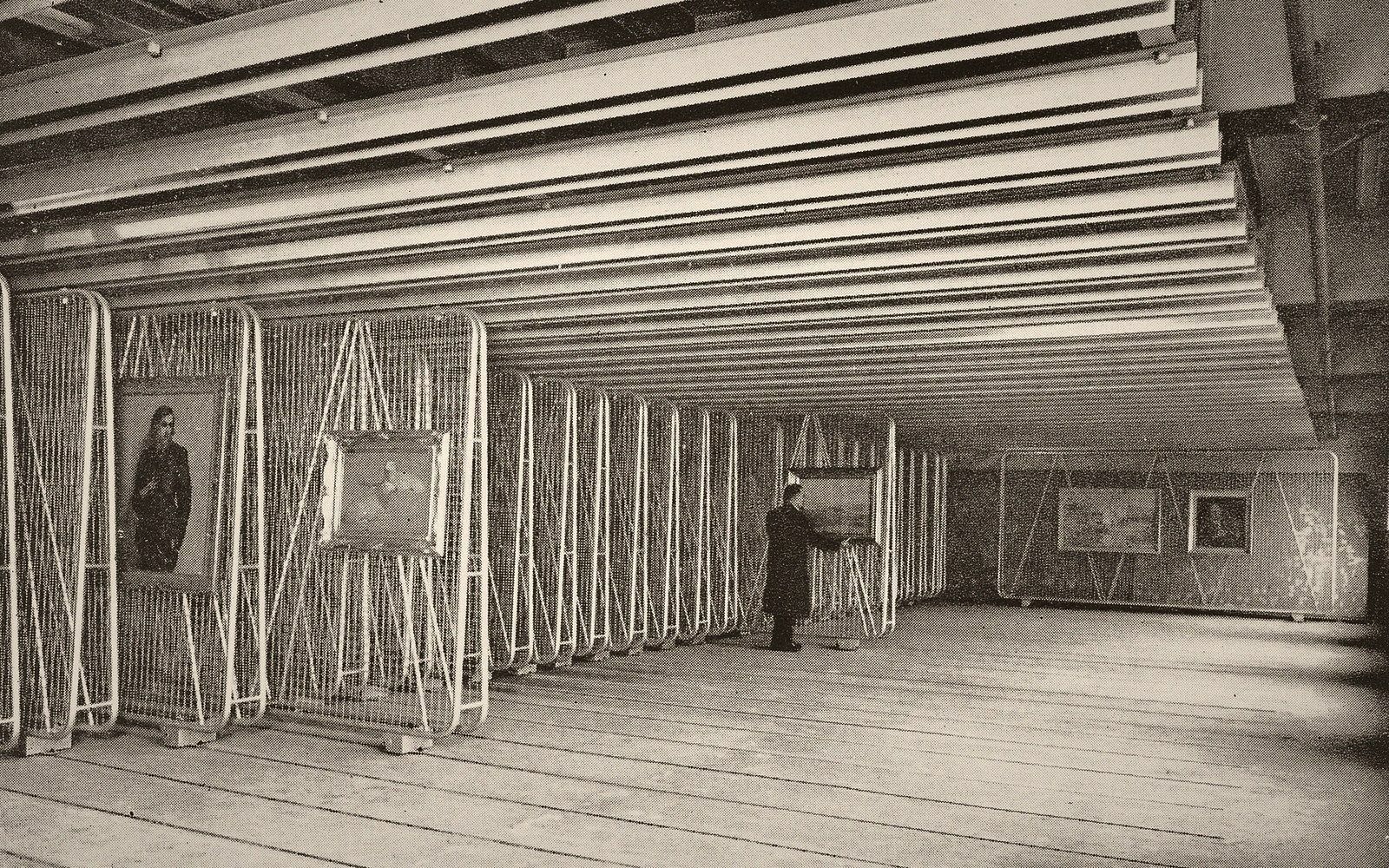
Most of a collection lives on racking like this. The room is designed around retrieval, not display.
Photo: Picture storage racks at the Walker Art Gallery, Liverpool. Wellcome M0015437 · Wikimedia Commons
What the remaking preserves is not always visible. A smock pleated by a method now known to perhaps three practitioners in its region carries that method in the finished cloth rather than in any manual. When conservation researchers analysed historic festival garments in several Central European collections, they found construction details — seam allowances cut to accommodate seasonal weight change, linings chosen to control static on embroidered surfaces — that no maker had thought to record because the knowledge lived, entirely, in the act of making.
The risk is not that old garments will be lost to moths or light, though they will be. The risk is that new garments will be made by people who do not know what they are replicating. A community that buys its festival dress from a theatrical costumier has exchanged an archive for a prop. The outward appearance may be preserved; the technique is gone, and with it every inference that technique permits about dye sources, trade routes, seasonal economy and social rank.
The garment remade correctly is primary evidence. It argues, as physical objects argue, from material. The garment approximated is a quotation without a source — plausible to a glance, worthless to a question.
The vault is often the oldest surviving room in a building: it was built to carry weight, so nobody ever needed to alter it.
Photo: Medieval Cellar beneath 38-39, Bayley Lane. Coventry. Vaulted ceiling looking South. · Wikimedia Commons
Filed in Observance